
 vn
vn en
en ja
ja ko
ko zh
zh


Top 10+ Must-See Historical Sites in Gia Lai

Gia Lai isn't just about its absolutely breathtaking natural beauty. For those who love history and culture, the historical sites here are incredibly captivating stops, perfect for anyone eager to really explore and understand this fascinating region.
Visiting thehistorical sites in Gia Lai,travelers will gain a deeper understanding of the culture and history, as well as the sacrifices made by previous generations, fostering a greater appreciation for life today. When you visit Gia Lai, don't miss these fascinating historical destinations recommended by63 Stravelbelow!
Top 10+ Famous and Unique Historical Sites in Gia Lai
This list of historical sites in Gia Lai offers an ideal opportunity to explore and learn about the people and unique beauty of this Central Highlands region.
Dak Po Victory Memorial House
Dak Po is a renowned historical site, commemorating the resounding victory of the Dak Po army and people during the resistance against the French. On June 24, 1954, a decisive ambush here completely annihilated the French Mobile Group 100 (GIM 100), contributing to the defeat of Operation Atlante. The Dak Po Victory stands as a testament to the intelligence and bravery of our army.
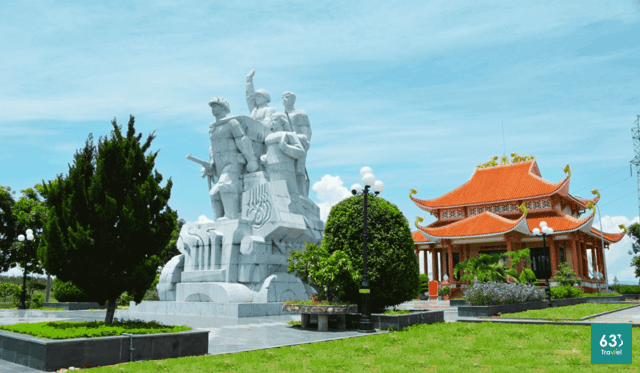
Dak Po Victory - The Dien Bien Phu of the Central Highlands
Dak Po Victory Monument and Martyrs' Memorial Templeis situated on the hill where the battle took place, covering an area of 1.1 hectares. The monument stands 14.5m tall, featuring five figures that symbolize the spirit of attack and the power of unity. Behind the monument, the Martyrs' Memorial Temple spans 360m², constructed with reinforced concrete, granite flooring, a wooden patterned ceiling, and yin-yang tiled roofs, all exquisitely carved, creating a distinctive and sacred architectural masterpiece.
Cuu Dinh Communal House
Cuu Dinh Communal House served as the spiritual center for the residents of the former Cuu Dinh village. Here, locals worship principal deities such as Thien Y A Na, the Village Guardian (Thanh Hoang), the Earth God (Tho Dia), along with the village's revered ancestors (Tien Hien, Hau Hien). Important festivals held at the communal house include the Quy Xuan and Thanh Minh ceremonies on the 16th day of the 2nd lunar month, and the Quy Thu ceremony on the 16th day of the 8th lunar month. Among these, the Quy Xuan ceremony is the most significant event, attracting a large number of participants.
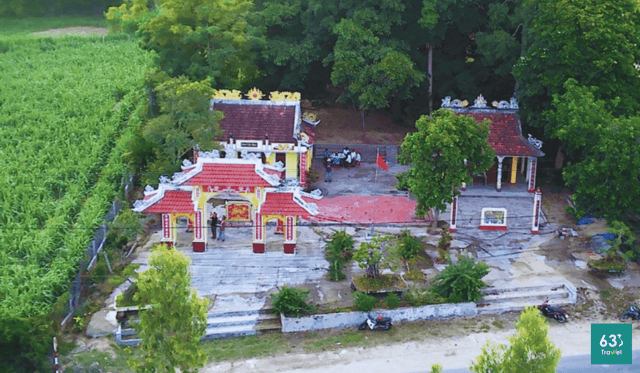
Cuu Dinh Communal House in Gia Lai
Cuu Dinh Communal House is not merely a place of worship but also a testament to the historical formation and development of Cuu Dinh hamlet, reflecting the process of migration, settlement, and land reclamation that established the village in the An Khe region from the early 20th century.
Hang En Waterfall
Hang En Waterfall (also known as K50 Waterfall) is located within the core zone of the Kon Ha Nung Plateau World Biosphere Reserve, recognized by UNESCO in September 2021. With its majestic beauty, K50 Waterfall has attracted many young people and adventure-seeking tourists. This destination was also voted into the "Top 7 Impressions of Vietnam in 2021" by Saigon Tiep Thi, a publication of Saigon Economic Magazine, based on reader popularity.
The waterfall is situated at the headwaters of the Con River, hidden deep within the pristine forests of the Kon Chu Rang Nature Reserve. With a height of over 50m and a maximum width of 100m, the waterfall creates a shimmering silver-green ribbon amidst the vast mountains, earning it the reputation as the most beautiful waterfall in the Central Highlands.
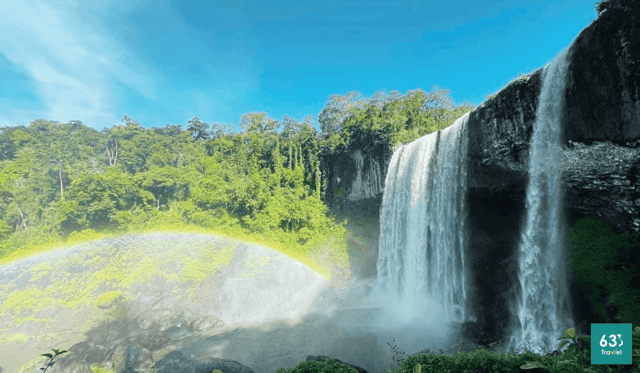
The Majestic Beauty of Hang En Waterfall
To reach this spot, visitors must embark on a challenging two-day trek through the forest. There are no homestays or hotels in the area, making camping the only option for those wishing to stay overnight. Its remote location necessitates a local guide to ensure safety.
While the journey to Hang En Waterfall is quite arduous, the majestic scenery that awaits is a truly rewarding experience. The ideal time to visit the waterfall is from January to June (the dry season), when the weather is dry, sunny, and not excessively hot.
Plei Oi National Historical - Cultural Site
The Plei Oi National Historical - Cultural Siteis closely associated with the legend of Hoa Xa and the Fire Kings. According to legend, the Fire King possessed extraordinary power and the might of a divine sword, capable of summoning rain and wind, ensuring bountiful harvests and prosperity for the villagers.
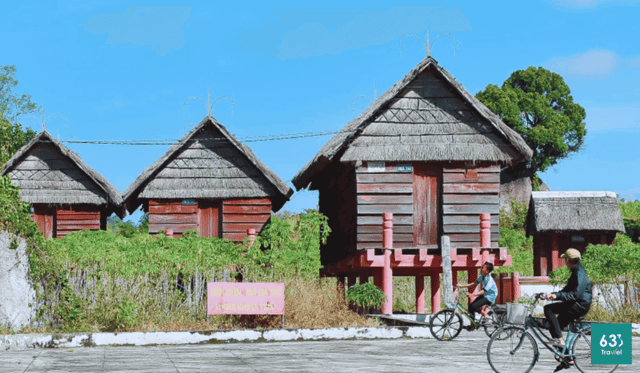
Visit Plei Oi to explore the 'Fire King' archaeological site
When French colonialists invaded the Central Highlands, they sought to establish relationships with local leaders and influential figures, especially the Pơtao Apui (Fire Kings), to gain control over the people. However, the Fire Kings resolutely refused to succumb to colonial bribery and oppression, instead becoming military leaders who rallied the people against the enemy.
>> See also:Unleash Your Adventure in the Central Highlands: Over 20 Mesmerizing Gia Lai Attractions
Stơr Resistance Village
Stơr Village, nestled peacefully beside the To Tung stream in Kbang district, is one of Gia Lai's captivating historical destinations. It is the homeland of Hero Núp, who led the Bahnar people in their resistance against French colonialists and American imperialists.
Visitors to Stơr Village will have the opportunity to visit the Hero Núp Memorial House, which displays numerous artifacts and photographs detailing his life and career. Additionally, there is an exhibition space showcasing the culture and daily life of the Bahnar people, featuring products like brocade, can wine, crossbows, and bows. If fortunate, visitors might also participate in traditional Bahnar festivals, enjoying xoang dances, the sounds of gongs, and rustic local dishes characteristic of the village.
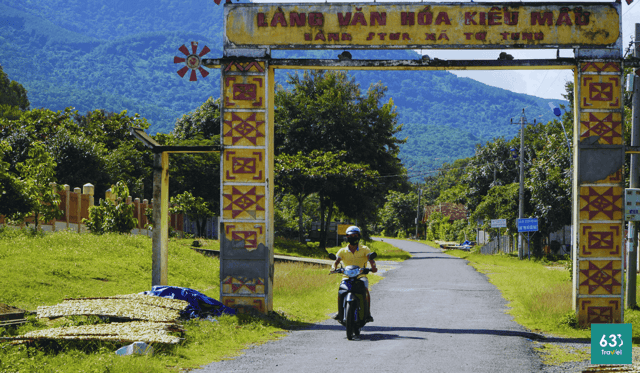
Stơr Resistance Village Historical and Cultural Site
The historical site is built on an area of 5 hectares, harmoniously blending tradition and modernity, creating a unique charm for the place. A grand gate welcomes visitors, and upon arrival, guests are warmly greeted by the friendly smiles of Stơr villagers.
The Stơr Resistance Village site stands as a symbol of the courage, resilience, and patriotism of the Central Highlands ethnic groups. It is an unmissable destination when visiting Gia Lai, where travelers come to honor the national heroes who dedicated their lives to the resistance.
Jackfruit Garden, Co Hau Field
Jackfruit Garden - Co Hau Field, one of Gia Lai's unique historical destinations, is increasingly attracting history enthusiasts, especially those interested in the Tay Son brothers' uprising. Located in Mo Dieu forest, Tu Thuy hamlet, Nghia An commune, K'Bang district, this site once served as a food production area for the Tay Son rebels.
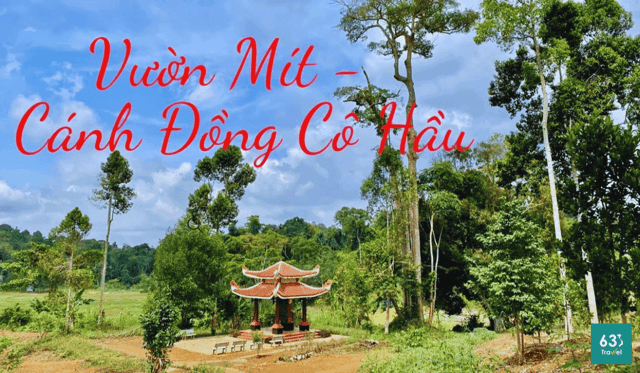
Jackfruit Garden and Co Hau Field Special National Relic
Connected to this place is the story of Ms. Ho – the wife of Nguyen Nhac, the Tay Son leader. Ms. Ho, daughter of the chief of Co Yem village, mobilized villagers to clear land, cultivate fields, and plant jackfruit to feed the troops. Although Nguyen Nhac took her as a secondary consort when he ascended the throne, she chose to return to her homeland and live a simple life in the familiar field and jackfruit garden until her passing.
Local people always remember her contributions, and the jackfruit garden stands as a testament to the life of this highland woman from Ka Nak. Today, the area still features over 100 ancient jackfruit trees scattered around, making it an attractive destination for visitors.
Gia Lai Provincial Museum
The Gia Lai Museum, located next to Dai Doan Ket Square in the heart of Pleiku city, preserves and presents an overview of Gia Lai's history, land, and people, attracting numerous visitors. Covering an area of 1200m², the museum is divided into 6 exhibition rooms displaying approximately 700 original artifacts, many of which hold high cultural and historical value. Notably, it features a collection of gongs and drums from the Jrai and Bahnar people, with an average diameter of 1m, and an extremely rare collection of ancient jars.
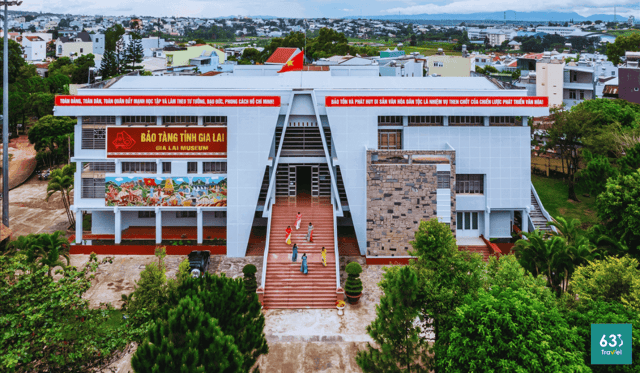
Gia Lai Provincial Museum is recognized as a Class II museum
Additionally, the museum exhibits many other valuable artifacts such as Cham Pa stone reliefs, dugout canoes, stilt houses, tomb house models, and An Thanh bronze drums. Visitors can also find photographs and documents about traditional festivals and the spiritual life of indigenous ethnic groups, along with thematic images of the resistance wars against the French and Americans by the army and people of Gia Lai.
Hero Núp Memorial House
The Hero Núp Memorial Houseis an unmissable destination when exploring the Central Highlands. Inaugurated on May 6, 2011, this house symbolizes the courage and sacrifice made during the nation's resistance.
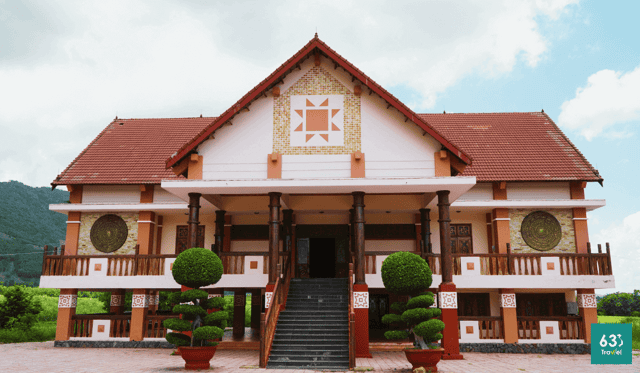
Hero Núp Museum – The Pride of the Central Highlands
This museum is part of the overall Stơr Resistance Village historical site, built on an area of 5 hectares, encompassing the memorial house, stilt house, statue of Hero Núp, a symbolic tomb area, and other structures.
Featuring the traditional stilt house architecture of the Bana people, the memorial house deeply embodies ethnic culture. The completion of this museum is not only a significant milestone but also a tribute to Hero Núp and the Stơr Resistance Village. It serves as a space preserving artifacts and documents about the hero and the resistance, allowing visitors to relive the arduous yet passionate and sacrificial days of national heroes. The Hero Núp Memorial House, standing steadfast in the village, is a proud symbol of the patriotism, spirit, and bravery of the Central Highlands people.
An Tan Temple
An Tan Temple not only marks the process of land reclamation and village establishment by the former residents of An Khe hamlet but also serves as the spiritual center for the people of the old An Tan commune and today's An Tan ward. It is a gathering place for devotees to honor the Cham Pa goddess, revered as Thien Y A Na, along with other deities such as the Village Guardian (Thanh Hoang), Cao Cac Nguyen Quan, Bach Ma Thai Giam, Son Quan, Tieu Dien, Chua Ngung Man Nuong...
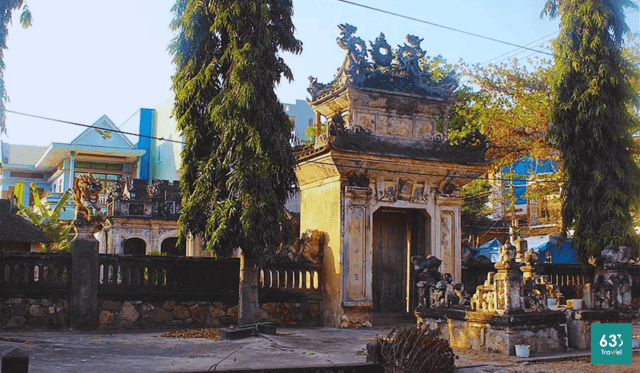
An Tan Temple in the Heart of Gia Lai
An Tan Temple also hosts important lunar calendar festivals such as the Khai Son ceremony (10th day of the 1st lunar month) and the Quy Xuan ceremony (17th day of the 2nd lunar month). On these days, villagers gather at the temple to perform respectful rituals and give thanks to the deities who have protected and watched over their community. Additionally, visitors can also exploreXa Templein Gia Lai to discover more about this national historical site.
Tay Son Thuong Dao Historical Site
The Tay Son Thuong Dao historical siteis an impressive historical site in Gia Lai, playing a crucial role in marking the nation's resistance history. It served as a strategic base complex for the Nguyen brothers and peasant soldiers during their uprising against the Nguyen Lords' regime in Dang Trong.
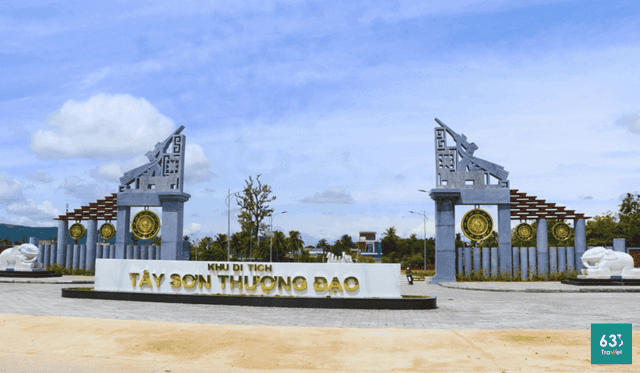
Tay Son Thuong Dao Historical Site and its Enduring Historical Beauty
This base was spread across the districts of An Khe, Kbang, Kong Chro, and Dak Po, leveraging the advantages of the vast mountainous region and rugged terrain. The Ba River provided protection, abundant forest resources, and fertile land to sustain the troops.
Today, the Tay Son Thuong Dao site still preserves many intact structures and precious artifacts from the late 18th-century Tay Son period, recognized as a National Historical Site. Visitors here not only have the opportunity to explore unique relics but also to experience and gain a deeper understanding of the glorious history of the Vietnamese nation.
>> Recommended reading:10+ Must-Visit Historical Sites in Phú Yên
Pleiku Prison
Pleiku Prison– a symbol of struggle and resistance against French and American domination, is one of the unmissable historical destinations when visiting Gia Lai. Pleiku was once a strategic hotspot, witnessing many significant historical events.
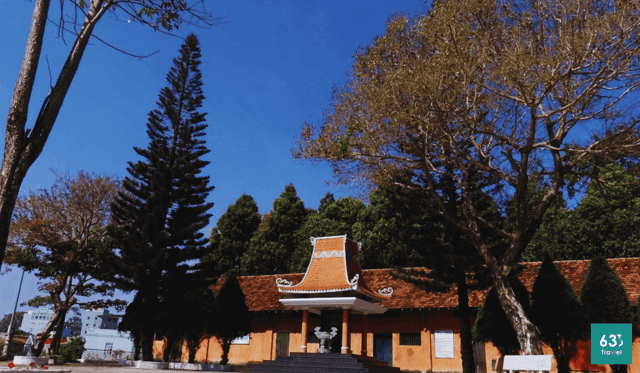
Explore Pleiku Prison - A Notorious 'Hell on Earth' of the Past
Built in 1925 on Yet Kieu Street, Dien Hong Ward, the prison witnessed many scenes of suffering and brutality while holding political prisoners. Recalling the memories from this place, one cannot help but shiver at the indomitable spirit of the soldiers and people of the Central Highlands, despite enduring immense pain and cruelty.
Spanning approximately 7 hectares, with 20 cells each about 10m² and built as solitary confinement cells, Pleiku Prison bears the painful scars of the past. Although no longer fully intact, it still preserves many artifacts and documents, serving as a living testament to the tireless struggle of the people of the Central Highlands.
Above is a list of thetop 10+ famous historical sites in Gia Lai, captivating visitors who have the chance to explore this region. You can save these for your travel plans and itinerary when visiting Gia Lai.
Gia Lai 15773 view
Update day : 10/06/2024

Monuments close by
See all
Tomb of Mai Xuan Thuong
Mai Xuan Thuong was the leader of the Can Vuong movement against the French at the end of the 19th century in Binh Dinh. Mai Xuan Thuong was born in the year of Canh Than, 1860, died in the year of the Pig, 1887, from Phu Lac village, Phu Phong district, Tuy Vien district, Binh Dinh province (now Phu Lac village, Binh Thanh commune, Tay Son district, Binh Dinh province). His father, Mai Xuan Tin, was the chief father in Cao Bang. His mother, Huynh Thi Nguyet, was the daughter of a noble family in the village. Mai Xuan Thuong is inherently intelligent and eager to learn. At the age of 18 (1878), he passed the Baccalaureate at Binh Dinh Examination School. At the age of 25 (1885), he passed the bachelor's exam. Responding to King Ham Nghi's Can Vuong edict, Mai Xuan Thuong returned to his hometown of Phu Lac, recruited insurgents, set up a base on Sung island to raise the Can Vuong flag against the French, then Mai Xuan Thuong brought his forces to join the army. The insurgent army was led by Dao Doan Dich and was appointed by Dao Doan Dich to the position of Military Salary Officer (in charge of food for the insurgent army). From then until 1887, the Can Vuong movement in Binh Dinh developed strongly and spread to Quang Ngai, Phu Yen... attracting tens of thousands of people from all walks of life to participate. On September 20, 1885, Dao Doan Dich died and assigned all his forces to Mai Xuan Thuong. He chose the Loc Dong mountain area (now in Binh Tuong commune, Tay Son district) as his headquarters and organized a flag worshiping ceremony, calling on scholars, literati, and people to join the movement to fight against the French. During that ceremony, insurgents from many regions in Binh Dinh province agreed to honor him as the Marshal leading the uprising and raised the slogan: "First to kill the left, later to attack the West". In early 1887, the French army under the command of Lieutenant Colonel Cherrean and the royal army led by Tran Ba Loc along with Minister Trira launched a major attack on the headquarters of the Can Vuong movement in Binh Dinh, the battle The fighting between the insurgent forces and the French enemy was extremely fierce, the fight was unequal, and in the end the insurgent force was pushed back. In March 1887, after a fierce battle in Bau Sau (An Nhon town, Binh Dinh province), Mai Xuan Thuong was seriously injured, the insurgents withdrew to Linh Dong secret area. On April 21, 1887, Tran Ba Loc surrounded and captured the Linh Dong secret base and captured a number of insurgents, including Mai Nguyen Soai's mother. On the night of April 30, 1887, Mai Xuan Thuong sent a suicide squad to break into Tran Ba Loc barracks, relieve the captured people, and he and a group of 50 subordinates crossed the mountain into Phu Yen and continued to resist. battle, but when she reached Phu Quy Pass (boundary between Binh Dinh and Phu Yen), she was captured by Tran Ba Loc's ambush and taken to be beheaded at Go Cham (East of Binh Dinh Citadel). The mausoleum of patriot Mai Xuan Thuong is located on a high hill of the Ngang mountain range (in Hoa Son village, Binh Tuong commune, Tay Son district, Binh Dinh province) about 50km northwest of Quy Nhon city; The mausoleum was built on a land area of 1988m2, inaugurated on January 22, 1961. Overall, the mausoleum is designed in the style of an ancient mausoleum, surrounded by low walls. The Lang gate (three gates) is made up of 4 square pillars, the top is tied in the style of a gourd and a vase, bearing the architectural appearance of a communal house or temple gate of the late 19th century. In the middle of the Mausoleum is Mai Xuan Thuong's tomb, rectangular in shape in the East - West direction; At the head of the grave is a stone stele engraved with an inscription recording the biography and career of Mai Xuan Thuong: The relic was ranked at the National level by the Ministry of Culture and Information on April 20, 1995. Source: People's Committee of Tay Son District, Binh Dinh Province
Gia Lai
11835 view
Rating : National monument
Tay Son Tam Kiet Temple
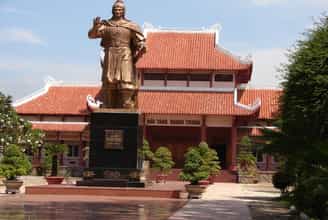
The Tam Kiet Tay Son Temple relic area includes 2 relics: Tay Son Palace and Truong Trau wharf site, located in Phu Phong town, Tay Son district, Binh Dinh province. associated with the names of three brothers Nguyen Nhac, Nguyen Hue and Nguyen Lu, leaders of the Tay Son movement, Tay Son dynasty at the end of the 18th century; decided to be classified as a special national monument by the Prime Minister on December 31, 2014). Historical sources say that the ancestors of the Tay Son Dynasty were originally from the Ho family in Hung Nguyen district, Nghe An. Come to rest in Tay Son Nhat hamlet, Quy Ninh. Nguyen Nhac's father, Mr. Ho Phi Phuc, and his wife, Ms. Nguyen Thi Dong, moved to Kien My village (now block 1, Phu Phong, Tay Son, Binh Dinh) to live for business purposes. Kien My village is also a gathering place for martyrs and the first base of the peasant movement in the lower Tay Son region. Nguyen Nhac and his two younger brothers, Nguyen Hue and Nguyen Lu, led the Tay Son uprising to bring Nguyen Hue and Nguyen Nhac to the throne. After the fall of the Tay Son dynasty, the house of Mr. and Mrs. Ho Phi Phuc's family in Kien My village was burned and razed. Some time later, right on the old house's foundation, local people contributed their contributions to build a tall and majestic communal house to secretly worship Tay Son Tam Kiet, named Kien My village communal house. In 1946, the communal house burned down. In 1958 - 1960, Binh Khe people once again built a new temple named Tay Son Palace, officially worshiping the three Tay Son brothers and holding an anniversary festival. commemorate every year. Tay Son Dien is built in the style of Dinh, with split stone foundations, solid brick walls, and cement tiled roof, with an area of over 100 square meters. The main shrine has three compartments, in the middle worships Emperor Quang Trung - Nguyen Hue, on the right worships Emperor Thai Duc - Nguyen Nhac, on the left worships Dong Dinh Vuong - Nguyen Lu, on the left and right the shrine worships military mandarins and ancestors. In the Tay Son family, the two gables have gongs and drums to serve ceremonies. In 1998, the State built and expanded Tay Son Palace. The temple was rebuilt with ancient architecture, quite large and majestic, three times the area of the old temple, made of reinforced concrete, Recreating the large, well-structured columns like an old communal house, the roof is cast in concrete, and covered with funny-nosed scale tiles. In front of the main temple, there is a pavilion like the old temple, on both sides there are two rows of large columns decorated with majestic dragons wrapped around the columns. In front of the house is a red granite stele with a summary of the temple's history. The Electric Gate remains the same. The well site was embellished with a hexagonal shelter, a concrete roof covered with scale tiles, and the surrounding Tamarind tree was also renovated more spaciously than before. In 2004, nine ceramic statues were brought back, covered in real gold on the outside, and placed in the inner sanctum. The rear hall has 3 altars, in the middle is the altar worshiping Emperor Quang Trung - Nguyen Hue; On the right is the altar worshiping Emperor Thai Duc - Nguyen Nhac; On the left is the altar of Dong Dinh Vuong - Nguyen Lu. Behind the altars is a large wooden diaphragm with carved dragons, patterns and gilded lacquer. In front, on both sides of the three altars, there are two wooden shelves holding eight sets of weapons. On the East and West sides of the inner palace, there are altars to worship civil servants, gods, and military generals of the Tay Son period. Although Tay Son Palace has gone through ups and downs over the years, it has been preserved, preserved and promoted by local people for generations to commemorate and pay tribute to the great contributions of national hero Quang Trung. – Nguyen Hue in his career of fighting to build and defend the country. Source: Department of Culture and Sports of Binh Dinh Province
Gia Lai
9247 view
Rating : Special national monument

Historical site of collective grave of martyrs of the Golden Star Division
The relic is a mass grave in Tay Phuong Danh area, Dap Da ward, An Nhon town, the resting place of 153 soldiers of Battalion 6, Regiment 12, Golden Star Division who died in the General campaign. offensive and uprising in the Spring of Mau Than 1968. Opening the 1968 Spring Mau Than campaign, in An Nhon area, from December 25, 1967 to January 17, 1968, provincial and district soldiers and guerrilla forces coordinated to attack the enemy in many places, causing them harm. much damage. Battalion 6, Regiment 12, Sao Vang Division of Military Region 5 was assigned the task of fighting the enemy in areas close to the provincial capital, attracting the enemy to the countryside so that the liberation army could attack Quy Nhon town. After attacking the Phu Cat training center on January 19, 1968, the Battalion destroyed the enemy holding the Sita - Nhon Hung bridge on Highway 1. Fearing the loss of Dap Da, the district capital of An Nhon and Quy Nhon will be threatened, the enemy has sent here a regiment of South Korean soldiers, 4 security companies, 32 tanks and armored vehicles to surround Battalion 6 and use artillery to counterattack. With superior military and weapons superiority, the enemy drove the people out, trying to surround and isolate the soldiers of Battalion 6 in the Tay Phuong Danh area to destroy them. The unit fought bravely with the enemy for 5 days and nights, from January 20, 1968 to January 24, 1968 until there were no more bullets left, the soldiers used hoes, shovels, and bayonets to attack with armor. fought with the enemy and sacrificed heroically. Admiring the tenacious fighting spirit, courage and indomitable sacrifice of the soldiers of Battalion 6, the People, despite the danger, buried 153 soldiers' bodies in a mass grave in the Tay Phuong Danh area - Smashing Rocks in infinite grief. People around the area call it Ma To. The mass grave of soldiers of Battalion 6, Regiment 12, Golden Star Division was ranked as a provincial revolutionary relic by the Provincial People's Committee on October 20, 2003. In 2016, the collective grave of soldiers of Battalion 6, Regiment 12, Golden Star Division was invested in many renovation items: building an incense house, carving stone tombstones, covering the entire grave with granite, and making a yard. The garden creates a clean and beautiful landscape, expressing the people's affection for the relatives of the Northern martyrs who fought and sacrificed for the South. Binh Dinh Provincial Museum is preparing a document to request the Ministry of Culture, Sports and Tourism to upgrade it to the national level to match the historical value of this relic. Source: Binh Dinh Province Electronic Information Portal
Gia Lai
9055 view
Rating : Provincial level relics

Go Lang historical site
Go Lang relic is located in Phu Lac village, Binh Thanh commune, Tay Son district, Binh Dinh province. Here, with the remaining vestiges of the garden and the old house floor, the hometown of Mrs. Nguyen Thi Dong, the mother of the three Tay Son masterpieces: Nguyen Nhac, Nguyen Hue and Nguyen Lu, outstanding leaders of the Tay Son peasant movement in the 18th century. The relic was ranked at the National level on November 16, 1988. Go Lang relic has many events related to the Tay Son three masterpieces in the early days of winning people's hearts and building the Tay Son uprising. These are legends and oral stories that local people often tell. for many generations despite the Nguyen Dynasty's revenge and devastating war... The story "Nguyen Nhac Vi Vuong". The story goes: "One late night, on the death anniversary at the house of Mr. and Mrs. Ho Phi Phuc - Nguyen Thi Dong in Go Lang, when everyone finished saying goodbye to each other and left, everyone was shocked to hear the sound of gongs and drums. emerging from the direction of Hon Sung, a solemn and mysterious sight that had never happened before. Everyone stopped and saw a magical light shining on an area on the mountain. They encouraged each other to go up and see. Arriving at the place of light, while hesitating and no one dared to advance, from the light suddenly appeared an old man with a red face, a long white beard, and a dragonfly hat. He stepped out and said loudly: among you. Is there anyone Nguyen Nhac? I obeyed the Jade Emperor's order to descend to the world this time to give the decree to King Nguyen Nhac. When Nguyen Nhac stepped forward, everyone bowed their heads respectfully and the old man disappeared. Or the story: Every time the Tay Son brothers return to their grandmother's hometown, they often tie their horses at the tall Bodhi tree next to Mr. and Mrs. Ho Phi Phuc's house, so the people in the area have a saying: "He's back on his horse again, Cutting Bodhi grass for his horses to eat." After the Tay Son dynasty passed away, the Nguyen Gia Long dynasty implemented a very harsh revenge policy. Mr. and Mrs. Ho Phi Phuc's old house at the relic was razed and became an empty piece of land, with only traces of the house's foundation remaining. , the square pillar stone is engraved with a rosette pattern with a size of 0.4m on each side and many ceramic fragments of broken dishes; In the old garden there are also some ancient trees: Thi, Thien Tue... During the Nguyen Dynasty, Phu Lac people always remembered and paid tribute to their ancestors and heroes of their homeland. They built a temple to worship Son Quan (Mountain God) called Cay Thi temple, some people called it Cay Thi temple. Mr. and Mrs. Ho Phi Phuc - Nguyen Thi Dong at their old garden and secretly worshiped Mr. and Mrs. Ho Phi Phuc - Nguyen Thi Dong, Tay Son Tam Kieu (Nguyen Nhac, Nguyen Hue and Nguyen Lu) on November 14, Lunar New Year The annual calendar at Phu Lac village communal house is called Thuong Tan worshiping day (new rice festival) with the form of commemorating flower incense and fox nectar. In 1999, the local government built a temple on the old foundation of the relic to worship Mr. and Mrs. Ho Phi Phuc - Nguyen Thi Dong and their paternal and maternal families, as well as ancestors who had publicly established the village, and the three masterpieces of Tay Son; Source: People's Committee of Tay Son District, Binh Dinh Province
Gia Lai
8753 view
Rating : National monument
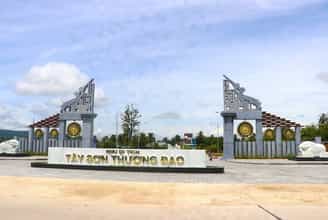
Tay Son Thuong Dao Historical Relic Area
Tay Son Thuong Dao is the common name of the land located above the An Khe pass area, now belonging to An Khe town, Kong Chro district, Dak Po district and K'Bang district, called Tay Son Thuong Dao. to distinguish it from the lower Tay Son district, Tay Son district of Binh Dinh province. The Tay Son Thuong Dao relic complex currently includes 17 relics divided into 6 clusters distributed mainly in An Khe, and partly in Dak Po, Kong Chro, and Kbang. This complex was officially ranked as a national historical relic by the Ministry of Culture, Sports and Tourism in 1991 and will continue to be ranked as a special national historical relic in 2021. An Khe town is the main area of the Tay Son Thuong Dao relic complex where Tam Kiet (the three Nguyen brothers) chose to be the base to launch the legendary Tay Son movement. This is a place where, thanks to the rugged terrain, the vast mountainous forests and protected Ba River, this place also has very rich sources of forest products and land, suitable for raising soldiers and expanding the force. Food and grain storage during the early period of the uprising was also the starting point for the glorious historical journey of the Tay Son Dynasty. The entrance area is a large gate with two rows of monolithic stones and Bahnar gongs bearing the breath of Central Highlands culture. The gate area is also decorated with embossed reliefs of the Tay Son uprising such as people riding elephants, scenes of communal houses, scenes of carrying goods to battle, rivers, streams, and hills. The delicately crafted images express joy, steadfastness and confidence in the cloth-clad heroic leader, and belief in victory. Passing through the gate, visitors will see two rows of stone horses sculpted full of courage and pride with extremely prominent white color. The horses are sculpted in a galloping position towards the gate, with elegant and heroic lines. Entering the center of the Tay Son Thuong Dao relic area, visitors will see the Tay Son Tam Kiet communal house, the Tay Son Thuong Dao museum and An Khe Truong. Tay Son Tam Kiet Temple has ancient architecture with traditional tiled roofs, columns carved with ancient embossed motifs, in front of the temple is a very large painted pond surrounded by gray stone pillars creating a unique landscape. harmonious accent. Meanwhile, Tay Son Thuong Dao Museum is a place to store and display artifacts and pictures about the uprising. Coming to the Tay Son Thuong Dao historical relic site on the 4th and 5th days of the Lunar New Year every year, visitors will participate in the Hue Bridge Festival to commemorate the Tay Son uprising. The festival consists of two main parts: the ceremony with solemn rituals according to ancient customs to pray for good weather and peace, the country and people are safe, and the festival part is traditional cultural activities such as performing Tay Son traditional martial arts, performing arts. gongs, ring fighting, playing folk games... The scale of the Hue Bridge festival is very large, demonstrating unique culture and preserving traditional cultural beauty, contributing to promoting the historical value as well as promoting tourism of the Tay Son Thuong Dao relic area. Over hundreds of years, the relic still stands the test of time as a reminder of the roots and heroic past of our ancestors so that the next generations can build a more prosperous and beautiful homeland. Source: Gia Lai Tourism
Gia Lai
8752 view
Rating : Special national monument
Nearby tourist attractions
See all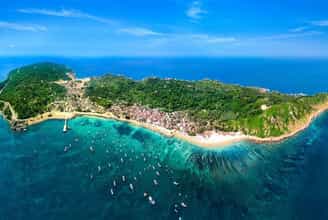
Cu Lao Xanh
Cu Lao Xanh is beautiful all year round, but you should avoid the end of July and August because this is the time when many storms will endanger your trip to Quy Nhon. Also, you should not go in the winter. The remaining ideal time to explore the island is February to June, September to October. Cu Lao Xanh is located in Nhon Chau island commune, Quy Nhon city, Binh Dinh province, only about 12 nautical miles from the mainland, equivalent to about half an hour by speedboat. But if you want to have an interesting experience, you can spend 2 hours traveling by wooden boat with local people to the island. In the bright yellow sunlight, Green Island appears with a clear blue color, the The boat anchored near the shore waiting for time to set sail. The first time you set foot on the island, visitors will be extremely surprised and delighted by the wild and peaceful beauty of the island. The island appears with endless green mountain ranges, majestic rocks in front of countless ocean waves, clear sea water, clearly revealing colorful coral reefs; fresh seafood dishes... With what nature bestows, Cu Lao Xanh is an ideal destination for tourists who love to explore amazing natural tourism. Once you arrive at Cu Lao Xanh, don't forget to go to the Harbor Bridge to watch the sunrise and see the bustling market scene every morning, or immerse yourself in the clear water, go snorkeling to see coral at Nho beach and Bon beach. .. In particular, coming to Cu Lao Xanh, many people cannot help but enjoy being introduced, visiting and exploring the lighthouse that is more than a hundred years old. History also records that in 1890, after a ship sank because it hit a reef in the Quy Nhon sea area, the French decided to build a lighthouse on Cu Lao Xanh, named Plogam Bir. . The purpose of the French building a lighthouse on Cu Lao Xanh was to guide ships and boats into and out of Quy Nhon port conveniently and safely. The lighthouse is located on the highest mountain on the island, 119m above sea level. Cu Lao Xanh Lighthouse is a wonderful blend of East and West architectural styles; It has both the "breath" of Gothic architecture and the appearance of Eastern architecture. The lighthouse consists of 4 parts, harmoniously distributed: The base of the tower has 32 steps made of bricks; cylindrical tower body, 19m high; Inside there is a 58-step spiral staircase and headlights that illuminate 27 nautical miles (nearly 50km). The entire lighthouse architecture is built of large boulders, with walls more than 1 meter thick. This is one of the earliest and most modern lighthouses built in Vietnam Those who have the opportunity to go to Cu Lao Xanh lighthouse once cannot help but be ecstatic about the morning dew, sunrise on the sea, or the red sunset at dusk. If you don't mind the night sea, experience fishing with fishermen in the nearby waters. It will be great to follow the rhythm of pulling fresh fish into the boat, to see with your own eyes, to handle the fresh fish that have just left the sea. The experience of working with fishermen is a wonderful experience. In addition, Cu Lao Xanh has many rocky beaches such as Thao Nguyen beach and Dong beach. There are large blocks of stone, of various shapes and colors, and arranged next to each other in a very orderly manner. All create a harmonious landscape picture combining rocks and sea and sky.
Gia Lai
8038 view
From February to June
Hon Kho
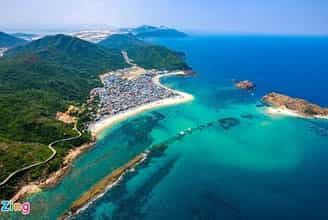
Hon Kho Island, also known as Hon Kho Island, is located in a complex of 32 islands near the shore of Binh Dinh province, about 19km from Quy Nhon city. Hon Kho is beautiful, peaceful, soft, not dry like its name. How to go to Hon Kho is also extremely simple. From City. From Ho Chi Minh City, you can take a plane, bus or train straight to Quy Nhon. Then rent a car to go all the way to the end of Thi Nai bridge, through Nhon Hoi Economic Zone, along Mai Huong Bay to reach the fishing village of Nhon Hai commune. Then you continue to rent a boat to get to this beautiful island. There are many boats with different services and prices for you to choose from. The price of a dry island ticket from the mainland to the island by boat ranges from 100K - 1200K. The biggest highlight of this island is probably the beautiful wilderness that has been preserved until now, with almost no human intervention. Not only that, this island also has many rocks and stones scattered throughout the island in many different shapes and sizes. Hon Kho is peaceful and pristine without too much human intervention. Therefore, when you come here, you can feel freedom, generosity, and simplicity. Around the island there are not many tall shady trees, but only green grass mixed with rocks, creating a very special wild scene. The most impressive thing about Hon Kho is the beautiful sea road. When the tide recedes, a cliff mixed with sand gradually reveals itself, creating a more than 500m long sea path leading from Nhon Hai fishing village to the island. This is a unique sea route that only exists in fairy tales but cannot be found anywhere else. However, it is not always possible to see this mysterious sea route because the water level fluctuates depending on the season. The wooden bridge around the strait is also a favorite place for many young people. Standing on the bridge, you can see the extremely impressive blue sea. On one side are majestic rocky mountains, on the other side is a romantic blue sea, creating a charming and unforgettable scenery. Hon Kho also has a clear blue sea on a white sand beach like any other beach in Quy Nhon, but what makes visitors excited is the feeling of freedom and generosity because they are separated from the city and immersed in nature. nature that this island offers. This is considered an ideal day trip destination for groups of friends who love to explore, or for those who want to have a relaxing day after all the fatigue of work. Not only that, you can also rent fishing boats from fishermen here to take them around the island or visit places with coral beaches at extremely affordable prices. For those who rent a boat from the mainland to the island and want this service, the price will range from 200,000 - 300,000 VND depending on the boat owner, for groups of about 5 - 10 people. The time to go from Quy Nhon to Hon Kho is only about 15-20 minutes, very fast. If you travel to dry islands on your own, you can rent a taxi from Quy Nhon city center for comfort and coolness. If you want to join a boat to the dry island, you should go early between 8 and 10 am because this is the most crowded time, making it easier to find people to join the boat. Going on a wooden boat costs about 100k/1 round-trip ticket, renting a private boat (10 seats) is about 500k/boat/1 round-trip ticket, joining a canoe costs about 200k/1 round-trip ticket, renting a private canoe (15 seats) is about 1200k/canoe/ 1 round trip ticket. Hon Kho has very few trees and almost no trees are taller than your head so it is extremely sunny. So if you don't want to come home from going out with tanned skin, you should be fully equipped with hats, hats, and sunscreen! The cafes here are just small temporary huts, so you can proactively prepare some drinks and snacks to bring along.
Gia Lai
8514 view
From January to December

Ky Co
Ky Co is located more than 20 km southeast of Quy Nhon city center. This is considered the most interesting tourist destination in Quy Nhon with two sides facing the mountains and one side facing the sea. Very suitable for motorbike travelers. You can travel by car, but traveling by motorbike will be more convenient for visiting and exploring this place. Quy Nhon has a temperate climate, so you can come here at any time of the year, but for the most convenience, you should go from February to August. At this time, the weather is cool, with little rain. Rain makes it easier to travel and visit. Coming here, you will be overwhelmed by the majestic wild beauty and harmony of nature. Standing from afar, you will see the majestic mountains, the shady green trees, the air is clear, the wind blows strongly on you, bringing with it the typical salty and acrid breath of the sea. Ky co has an arc like the crescent moon of everyday days. You will feel the interesting thing when coming to Ky Co beach: the water here is very cool and shallow. You can freely immerse yourself in the jade water, swim 100m away and the water is only up to your neck. White, soft sand strips, cool green trees, green coconut trees hanging down on the sand. What's more interesting than when you're bored of playing around in the clear blue water, you can walk barefoot next to the coconut trees and idly sing a few love songs to the sea. The whole scene becomes sparklingly beautiful under the sunlight. Ky Co beach is sparklingly beautiful like a treasure chest filled with precious stones. The sunlight shines on the sparkling blue sea surface, making it look like it's silver from afar, and the grains of sand sparkle like tiny diamonds. The rocks here are linked together. When the tide rises, water rushes in between the rocks, creating beautiful artificial swimming pools. The water does not flow down, but seems to want to hold and settle into the rocks, playfully playing and caressing the foot of the mountain like naughty children. The artificial swimming pool is very cool, the water is so clear you can clearly see the bottom of the pool. An artificial swimming pool can accommodate 5-7 people. Very suitable for family exploration. It's very safe for children to swim in it. In the morning, when the sun just rises, the water in Ky Co sea is as clear as a mirror reflecting the sky. You can go to the beach early to watch the romantic sunset. The drops of morning dew that remained on the fallen leaves dripped drop by drop into the smooth sand. So quiet, so peaceful and pleasant. The red sunlight gradually appeared behind the mist and clouds. The boats float on the sea with peaceful songs for a bright and bountiful day. Not only that, there are also cliffs and large rocks, the higher the square base, the sharper they become, rising in the middle of the sea, looking like small towers or spikes poking into the sky. When the tide recedes, a path along the cliff will appear. You can also walk along the mountain range near the shore to visit the sea. Wading in the cool water, playing with the ocean waves, turning over seaweed stalks to catch small sea animals. In particular, you should schedule to fully enjoy Ky Co Quy Nhon beach by watching coral at Bai Dua. Going by boat to Bai Dua is very popular, you can ask and make an appointment with the boat owners in the beach area on the first day of arrival to plan to go to Bai Dua on a sunny day, avoiding cloudy and gloomy days. . If you come here, you must definitely immerse yourself in the clear blue water to clearly feel the excitement and wonderfulness of Ky Co beach. Dubbed the Maldives of Vietnam, Ky Co has a wild beauty that captivates people's hearts. For those who love to experience and explore, camping overnight in Ky Co will definitely be a memorable experience. You can bring a tent, some snacks and choose specialties of Nhon Ly beach to BBQ right on the beach. In addition to swimming, visitors here can also comfortably participate in activities and games held on Ky Co beach such as parachutes, water motorbikes, banana floats, etc. And if you go in a large group, Can also organize interesting team building games for everyone.
Gia Lai
8214 view
November to April
Eo Gio
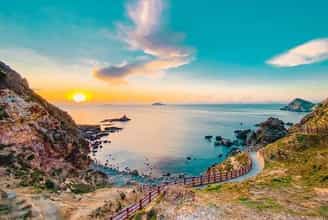
Located in Nhon Ly commune, only about 20km from Quy Nhon city, Binh Dinh province, Eo Gio is a famous tourist destination that attracts tourists because of the wild and harmonious natural beauty of the river. Water, clouds and mountains converge. As one of the ideal backpacking destinations, Eo Gio still has a wild beauty with a blue strait, surrounded by high rocky mountains with many strange shapes, creating a curved position as if to hug the waist. This beautiful inlet sea. Is that why this place is called Eo Gio? Located in the east of Phuong Mai peninsula, surrounded by Quy Nhon city with a long coastal rocky mountain range and a number of high peaks such as Den Mountain, Hon Mai, Hon Yen, Hon Chop The highest area is about 200-300 and At the farthest point of the arc is Eo Gio. Right from the road to Eo Gio, you will admire the magnificent natural scenery through rows of casuarinas along both sides of the long asphalt road, in the distance are majestic mountains, towering in the sea space. Blue, white sand is wonderfully beautiful. Coming closer, Eo Gio Quy Nhon looks like a small strait surrounded by high, graceful rocky mountains, "hugging" the beach. Not inferior to any beach in the Central region, Eo Gio possesses clear blue water on the shore of sparkling golden sand, whispering and rushing waves crashing against the rugged rocky shores, emitting cool white foam. . Under the clear blue water are schools of small fish swimming freely among beautiful and colorful coral reefs. At the foot of the mountain is De rock beach with bumpy roads and countless rocks covered with rocks eroded by sea water over the years. The stones here come in many sizes and interesting shapes, creating an extremely unique masterpiece of stone and water. The unique and attractive feature of Eo Gio is created from rocks and water. Over the years, water has eroded the rock, and the weathering process of the sea breeze has created 19 bird's nest caves with very funny names such as Ky Co cave, Ba Nghe cave, Bat cave, Suc Khoe cave... Thanks to that. Phuong Mai peninsula has become the locality with the second most bird nest caves in our country after Nha Trang. Coming here in the early morning, you can lie down comfortably on the large, flat rocks and watch the beautiful sunrise amidst the poetic and splendid natural space of sea, sky, mountains and water. In the morning light, the sound of ocean waves crashing against the shore mixed with the gentle sound of the wind creates a wonderful harmony, dispelling many worries of everyday life. Coming to Eo Gio, don't forget to experience walking on the coastal walking path halfway up the majestic mountains. The road is made up of thousands of long steps, built with white and red handrails, both safe and beautiful so you can freely admire the scenery and take "shimmering" pictures. From here, looking out into the distance, you will feel overwhelmed by the wild, majestic and "picturesque" natural scenery of Eo Gio. In addition, you can also travel by canoe to explore Ky Co beach or visit the fishing village not far away and enjoy extremely fresh seafood caught by the people here. . Located right near Eo Gio is an ancient fishing village famous for its majestic pagoda named Tinh Xa Ngoc Hoa, a majestic pagoda located peacefully on Eo Gio. This place is also known for the largest two-faced Guan Yin Buddha statue in Vietnam, facing the ocean, carrying the wish of peace, prosperity and happiness for the honest fishermen here. Every year, Tinh Xa Ngoc Hoa Pagoda always attracts many tourists from all over to make pilgrimages to worship Buddha and admire the peaceful and sacred pagoda. With the majestic natural beauty of rolling mountains, vast blue sea and white sand, Eo Gio will certainly be a destination that brings many unforgettable impressions to visitors. Especially for young people who love to explore and adventure, this place is truly an interesting check-in place with friends.
Gia Lai
8075 view
March to August

Cape Vi Rong
Cape Vi Rong, also briefly known as Cape Dragon, legend has it that in the past, this mountain was still intact, shaped like a carp's fin, so it made people think of a rocky mountain with dragon scales and called it a mountain with dragon scales. is "Dragon Scale Stone". Cao Bien - a general at that time - saw that the mountain had a lot of spiritual energy condensed, so he cast a spell to cut off the dragon's scales to eliminate bad things - while he was looking for a land of prosperity. When slashed, the dragon's blood poured down, condensing into many small red rocks mixed in the nearby sandbanks. If you walk on the sand, there will be times when you accidentally see vermillion stones, which are the dragon's blood as the legend says. When viewed from afar or from above, you will see that Quy Nhon Vi Rong Cape jutting out into the sea is a very proud, indomitable rock amidst the vast ocean waves. A dragon seemed to want to break out of its confinement, leaning towards the sea. The silver waves crashed into the rapids, releasing white foam like the dragon's mouth was spraying water. You will feel fascinated when looking at that scene and want to have a camera to capture the beautiful moments that nature has carved and sculpted very skillfully. And that's just the outside, in the heart of the mountain there is a cave that goes out to the sea. If you like to experience it, you can go inside to explore, but it's still very difficult. You can admire the extremely vivid natural scenery. You can also climb to the highest point of the mountain, have a panoramic view of the sea, you will see fishing boats coming in and out, undulating rocky mountains, mountains one after another, you will see the beach. White sand stretches as far as the eye can see with cool green trees planted along the shore,... just standing and looking at it will give you a feeling of relaxation, comfort, being immersed in nature, hearing the sound of crashing waves. rocky rapids, the sound of the wind blowing from afar brings with it the characteristic taste of the sea. In addition to conquering the mountain and admiring the majestic scenery of Mui Vi Rong Binh Dinh, don't forget that you can swim right at the foot of the mountain. This place has long stretches of pure white sand dunes and beaches with cool, clear blue water that you can see through to the bottom for you to have fun with. There are also small rocks near the shore so you can sit on them to rest, splash in the water or check in for beautiful sparkling photos with relatives and friends. In addition, in winter, this is an extremely ideal surfing location for those who love this adventure sport. Swim in the sea and then enjoy rich seafood dishes such as squid, shrimp, fish,... right into the village you can explore and visit Tan Phung market with the most delicious and fresh seafood caught. from the sea every day. If you have delicious bait, you must definitely drink My Tho wine, a specialty of this place that you cannot help but try. Sip a few cups of wine and grilled dried squid with friends, sit around for a while and see how happy life can be. The road to Mui Vi Rong is like the road to a fairyland. You can climb mountains to see nature, swim, have fun and eat delicious food, but it doesn't stop there, if you come in April. Every year in the lunar calendar (from the 11th to 14th day of the 4th lunar month), you can also have fun and explore the "Fishing Festival" to pray for favorable weather and good business with many activities taking place during the lunar calendar. Festivals such as racing, boi singing, cheo mau at Ong Nam Hai mausoleum,... to experience the culture rich in national identity.
Gia Lai
7919 view
November to April
 AI Travelviet