
 vn
vn en
en ja
ja ko
ko zh
zh


Journey Through Time: Exploring Sơn La's 16+ Sacred and Ancient Historical Sites
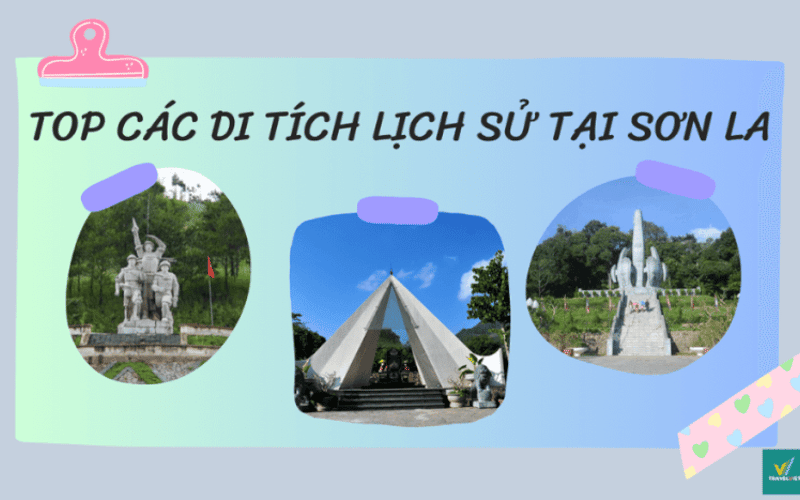
Sơn La is home to fascinating historical sites that truly captivate visitors, each one brimming with profound historical significance. Join 63Stravel as we embark on a journey to explore these remarkable landmarks!
When people think of Son La, they often picture its beautiful landscapes, romantic plum blossom seasons, or vast tea hills. But beyond that, this region is also home to manyhistorical sites in Son Lathat are sacred and ancient. Join63 Stravelto discover Son La's most famous historical sites!
Top 16+ Most Fascinating Historical Sites in Son La for You to Explore
Son La isn't just home to stunning attractions; it also boasts numerous ancient historical sites that draw many visitors. Below is a list of historical sites in Son La that you can save and explore if you have the chance to visit.
Ta Vai Bridge
Ta Vai Bridge, located in Ta Vai village, Chieng Hac commune, Yen Chau district, is a famous historical site in the province. During the resistance wars against the French and Americans, the bridge was not only vital for local life but also a crucial transportation artery. During the war, Ta Vai Bridge withstood 1,272 bombs from American aircraft yet remained standing, ensuring continuous traffic flow.
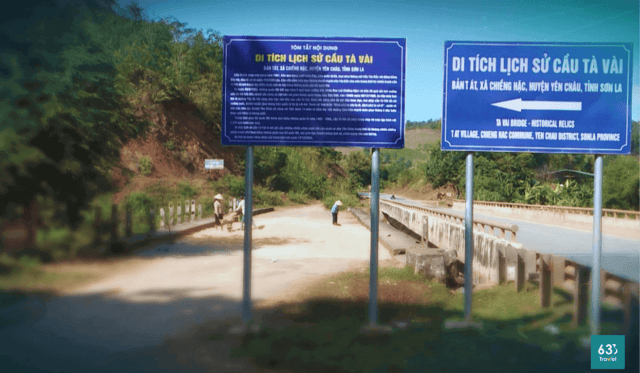
Ta Vai Bridge: A Landmark of History in Son La.
The fierce battles at Ta Vai Bridge witnessed the resilience of the self-defense militia and the army, determined to protect this vital transportation route. From March to December 1966, the 14th Anti-Aircraft Artillery Battalion, with the support of local residents, deployed anti-aircraft guns to defend the bridge. The unity and indomitable fighting spirit of the militia and soldiers kept this crucial route open in all situations.
White Bridge Historical Site
The White Bridge Historical Site, located on National Highway 6A (formerly Road 41), is a bridge spanning Nam La Stream, connecting the Northern Delta provinces with Son La, Dien Bien, and Lai Chau. Measuring 45m long and 7m wide, the White Bridge was designed and built in 1963, holding strategic significance during the two resistance wars against the French and Americans.
Between 1965 and 1968, the White Bridge became a target for American air raids, enduring 34 attacks with 870 bombs and hundreds of rockets, which completely destroyed it. However, in 2003, the bridge was rebuilt with a modern design, measuring 48.1m long and 14m wide, and was officially inaugurated in 2006.
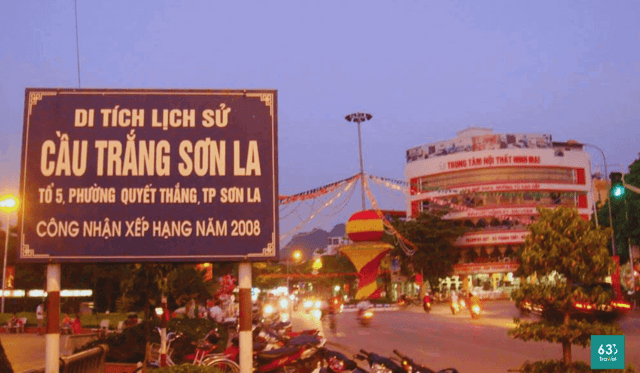
The Famous White Bridge Historical Site in Son La.
The White Bridge is not only a historical testament to the resilience, unity, and patriotism of Son La's military and people, but also evidence exposing the crimes of the American imperialists. It commemorates exemplary figures such as national emulation soldier Nguyen Kim Tien, who helped ensure smooth transportation, delivering food, supplies, and weapons to the Northwest region and Upper Laos.
Walking across the White Bridge today, and feeling the immense changes in life, we further appreciate the sacrifices of previous generations. The White Bridge, recognized as a provincial-level historical site by the Son La Provincial People's Committee on September 15, 2008, forever stands as a symbol of revolutionary spirit, connecting the past, present, and future, and inspiring pride in the patriotic traditions of our homeland.
General Vo Nguyen Giap Forest
General Vo Nguyen Giap Forest, affectionately known as "Mr. Giap's Forest," is located in Gia Phu commune, Phu Yen district, Son La province. Originally called Ban Nhot Forest, this area was renamed to express gratitude and respect for General Vo Nguyen Giap. Covering approximately 200 hectares, Mr. Giap's Forest is surrounded by two mountain ranges, dense trees, and is covered in clouds year-round.
Mr. Giap's Forest is both a historical site and an attractive tourist destination. Unlike many other forests, it remains pristine with ancient Dipterocarpus alatus, Dalbergia, Toona, Sâng, Dracontomelon trees, and towering Fokienia trees. The tranquil atmosphere of the old forest is enhanced by the constant gurgling of the Dưn stream, evoking the heroic history of this place.
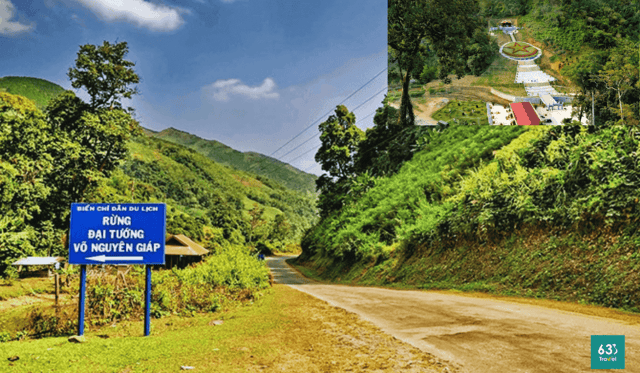
Son La Preserves the Green of the Forest Named After General Vo Nguyen Giap.
This forest was the first encampment for General Vo Nguyen Giap and our army. Important locations such as the observation post on Hien Stream Hill, the field hospital by Bua Stream, and the command post at the source of Tac Te Stream on Tang Tu Hillside still exist, marking heroic combat memories.
Visiting Mr. Giap's Forest, travelers can immerse themselves in its historical atmosphere, appreciate its grandeur, and honor the sacrifices of past generations. This forest is not only a symbol of patriotism but also a precious natural heritage, inspiring pride in the nation's revolutionary traditions.
Ban Mon Rock Shelter Archaeological Site
Ban Mon Rock Shelter Siteis the first archaeological site discovered in Northwest Vietnam. In 1927, French archaeologist Madeleine Colani conducted excavations here, uncovering numerous stone tools, jewelry, and river snail shells. Subsequently, other researchers carried out further surveys, and in 2006, Ban Mon Rock Shelter was recognized as a provincial-level historical site. In 2017, the Provincial Museum invested in renovating this site.
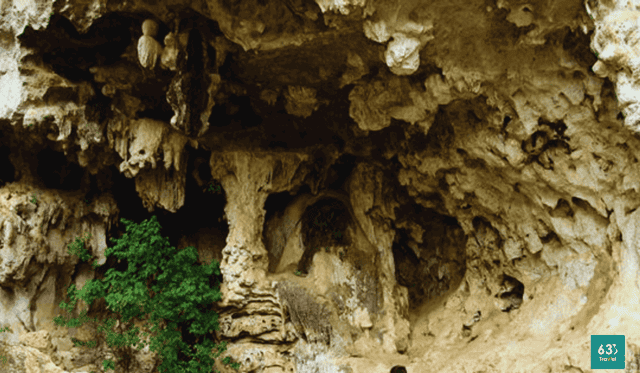
Ban Mon Rock Shelter Archaeological Site is Ranked as a National Heritage Site.
In April 2021, the Provincial Museum, in collaboration with the Institute of Archaeology, the Vietnam Archaeological Association, and the Thuan Chau District People's Committee, conducted excavations and discovered two prehistoric graves along with over 1,000 stone artifacts and nearly 2,000 pottery fragments, many dating back 10,000 to 5,000 years. This discovery proves that Ban Mon Rock Shelter was once a residential area, a workshop for crafting stone axes, and a burial ground. Due to its immense value, this site was designated a National Heritage Site on March 20, 2023.
Ban Mon Rock Shelter holds significant national historical, cultural, and scientific value, linked to the prehistoric communities that once lived here. It serves as a valuable resource for scientists to research and decipher the site's significance, contributing to the preservation and promotion of national cultural heritage. Simultaneously, it fosters local socio-economic development. Ban Mon Rock Shelter is also a unique geological and archaeological heritage site, representing a precious tourism asset for Son La during its period of opening, integration, and regional connectivity.
Nang Han Temple
When you visit Son La, don't miss the opportunity to explore a special 17th-century temple. This temple is not only a testament to resilience and powerful restoration but also holds many intriguing and mysterious stories from history.
After the main temple was submerged by the Son La Hydropower Plant, its near-original reconstruction was an incredible feat. Remarkably, the temple has retained its beauty and allure, serving as a sacred place that attracts visitors from all over.
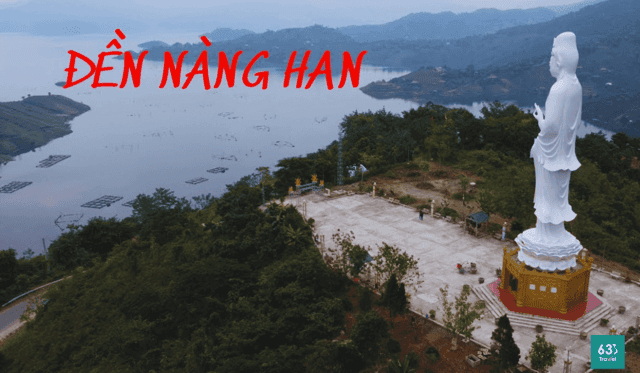
Nang Han Temple - Linh Son Thuy Tu in Son La.
According to legend, this temple is associated with the story of Nang Han – the only daughter of the Khmu lord of Chieng Phung (now Quynh Nhai). The tale of Nang Han carries profound imprints of love, kinship, and deep filial piety.
Visiting this 17th-century temple, you'll not only admire its ancient architectural beauty but also have the chance to learn more about the unique history, culture, and traditions of this locality. It is certainly an interesting and meaningful destination on your journey to explore the land of Son La.
>> Read more:Top Provinces and Cities: Vietnam's Most Popular Destinations for Travelers
Tang Me Cave Tomb Archaeological Site
If you have the opportunity to visit Son La, don't miss a trip toTang Me Cave Tomb, one of the most unique and rare sites, recognized as a National Heritage Site since 2014. Located in Loi village, Suoi Bang commune, Van Ho district, this cave tomb is an ideal destination for adventure enthusiasts and explorers.
To reach Tang Me Cave Tomb, you'll need to walk for about 30 minutes from the center of Suoi Bang commune, traversing a trail and climbing a steep cliff. However, this adventure will be rewarded when you arrive at the cave tomb, nestled halfway up the mountain.
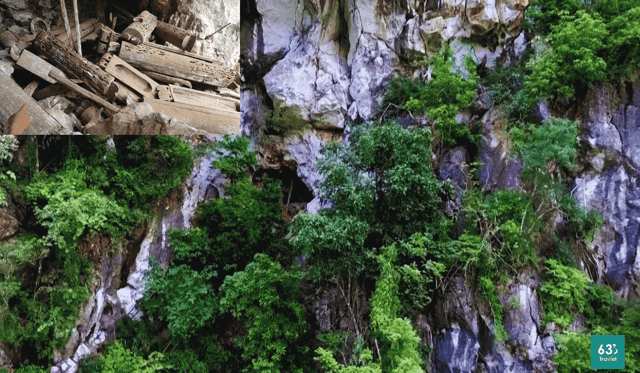
The Mysterious World of Ancient Hanging Tombs in Tang Me Cave Tomb Archaeological Site.
Tang Me Cave Tomb possesses unique and peculiar characteristics. The most striking feature is the coffins, crafted from split wood, shaped like boats, and exquisitely decorated with "swallowtail" motifs. The artifacts found inside these coffins provide valuable insights into the lives of ancient inhabitants from thousands of years ago.
This site is not only a testament to the long-term habitation of ancient people in Van Ho district but also a valuable resource for scientists researching the history, culture, and society of this region. Furthermore, the preservation and promotion of Tang Me Cave Tomb's value contribute to the local economic and tourism development.
A Phu Cave
A Phu Cave (also known as Tham Cop Cave) is a unique and rare destination, located in Hong Ngai village, Hong Ngai commune, Bac Yen town, Son La province. The cave is described as resembling the mouth of a frog catching prey, with a majestic mountain face and many narrow crevices. A Phu Cave is not only a place where visitors can explore pristine natural beauty but also a site that marks the deep history and culture of the locality. Nestled within a primeval forest, with a fresh and cool climate, this cave attracts many people eager to explore and experience it.
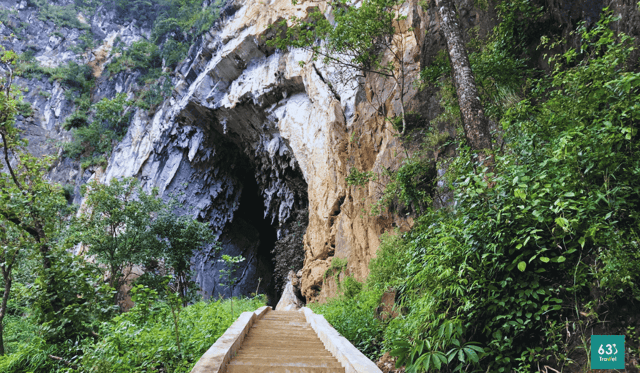
A Phu Cave: A Place of Historical and Cultural Value.
A Phu Cave has two entrances on its east and west sides, connecting and dividing into three chambers. The third chamber is the largest, with a high ceiling and an uneven floor. Coffins made from split wood, exquisitely decorated, showcase the artistry of ancient people. Beyond its natural beauty and profound history, local authorities have also implemented measures to protect and preserve A Phu Cave. The landscape around the cave remains conserved, with no encroachment or environmental damage. This is not only a tourist attraction but also a unique cultural heritage of this region.
Co Noi T-Junction Historical Site
When you arrive in Moc Chau, don't forget to visit the Co Noi T-Junction historical site – a landmark marking an important part of the Dien Bien Phu battlefield. This was not only the scene of fierce battles but also witnessed the tragic sacrifices of hundreds of soldiers. Heroic history has recorded unforgettable memories of the nation's children. You should stop here to remember and pay tribute to the heroes who sacrificed for their homeland.
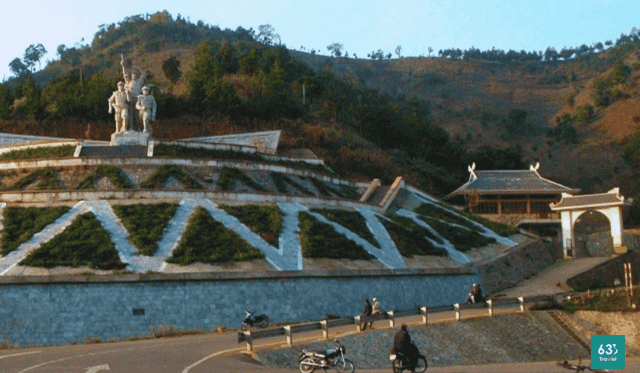
Co Noi T-Junction: An Immortal Epic Resounds Forever.
Ancient Stone Field of Hang Chu
Hang Chu Village, located in Hang Chu commune, Bac Yen, Son La, is an attractive destination in the Northwest region, home to the Hmong ethnic group. To reach the village, visitors must traverse challenging forest paths, streams, and mountain slopes. Here, locals discovered the ancient Khe Ho stone field, featuring unique and mysterious carvings.
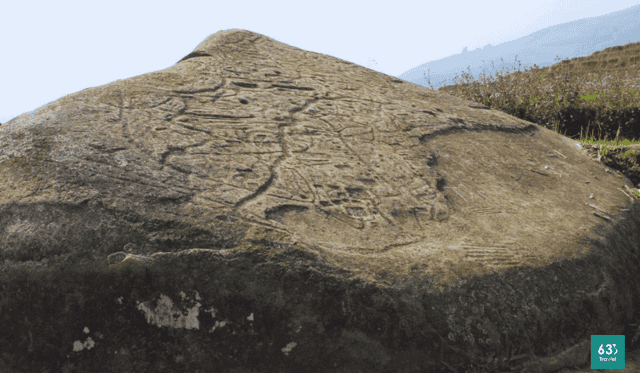
Discover the Khe Ho Carved Stone Field Heritage in Son La.
Located not far away in Hang De village, four carved stone blocks are situated 5 to 16 meters apart. Their complex, spiral, and mysterious patterns have captivated researchers and history enthusiasts. Khe Ho, nestled deep within a narrow valley, is an unmissable destination for anyone interested in archaeology and culture. Discovered in 2011, this site is currently a vibrant subject of research, with hopes of uncovering more historical and cultural mysteries of the Vietnamese people.
Km 64 Vengeance Monument Historical Site
When experiencing Moc Chau and visiting the Km 64 Vengeance Monument historical site in Thao Nguyen Moc Chau town, visitors will immerse themselves in an emotional historical setting. This site commemorates the brave people of the North during the resistance war against America for national salvation. Situated alongside National Highway 6, 135 km from Son La city, this monument is located at the junction of the roads to Son La - Hanoi and Phu Yen, with its main face oriented towards National Highway 6, making it convenient for visits.
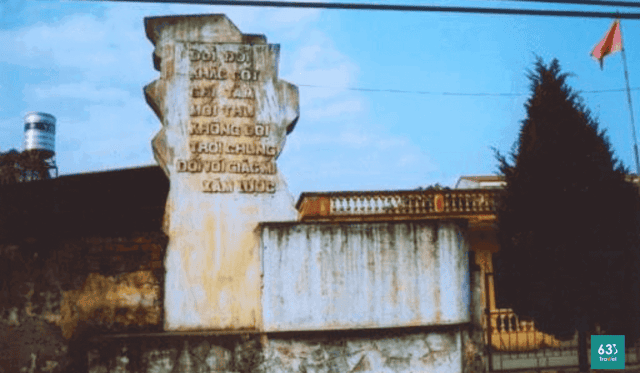
Vengeance Monument Site - Etched in Memory Against the American Invaders.
To acknowledge the indomitable spirit of the people and to ignite national pride, in 1969, the authorities and people of Thao Nguyen Moc Chau town erected the Vengeance Monument at Km 64, with a clear message: “Forever etched in our hearts is the irreconcilable hatred for the American invaders.”
This is not only a historical symbol but also a warning, a reminder of the nation's unity and determination in protecting the country's independence and freedom. The Km 64 Vengeance Monument is not just a relic, but an inseparable part of the homeland's soul and the resilient spirit of the people of Northern Vietnam.
Na San Stronghold Group Historical Site
Na San Stronghold Groupin Son La, was not only one of the main military bases of the French colonialists in the Northwest but also a symbol of the perseverance and bravery of our army and people in the struggle for independence. From the early years of their re-occupation of Son La - Northwest, the French colonialists chose Na San to build a robust military base system. Leveraging its strategic location and the convenience of the mountainous terrain, they constructed a closed complex spanning over 10 km2, known as the Na San Stronghold Group.
This stronghold group was built in a closed arc model, featuring 17 interconnected strongpoints. These strongpoints were strategically distributed across the area, including a transport airfield, storage systems for food and weapons, and well-protected tunnels and trenches.
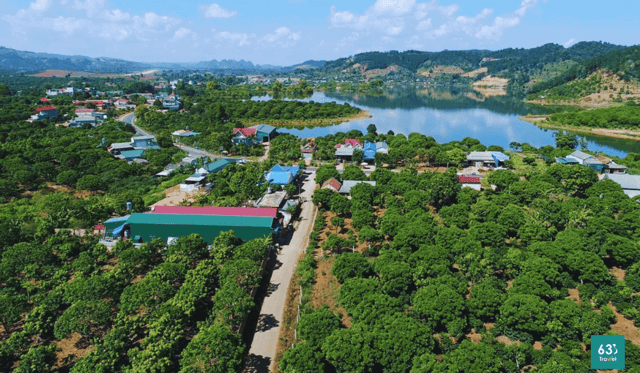
Na San Stronghold Group in the Northwest Campaign 70 Years Later.
The fierce battle at Na San during the Northwest Campaign in 1952 played a crucial role in the ultimate victory of the war. Our army and people eliminated many enemy forces, seized numerous weapons and ammunition, forcing the enemy to retreat and become completely isolated.
After the campaign, the Na San Stronghold Group became not only a symbol of victory but also clear evidence of the disastrous defeat of the French colonialists. Marking the end of a dark period, Na San was designated a National Historical Site in 1998, honoring the nation's efforts and sacrifices in the struggle for independence.
>> Interesting article:Vietnam's Must-Visit Museums: Favorites Among International Travelers
Thuan Chau Flagpole Historical Site
Thuan Chau Flagpole Historical Site, located in Pan village, Chieng Ly commune, Thuan Chau district, commemorates a special event on May 7, 1959, when President Ho Chi Minh, along with the Party and Government leadership, visited the Northwest region. On that day, to mark the 5th anniversary of the historic Dien Bien Phu Victory and the 4th anniversary of the establishment of the Thai - Meo Autonomous Region, Ho Chi Minh and a government delegation visited Son La province. In Thuan Chau, over 10,000 people and compatriots from 30 ethnic groups participated in a rally to celebrate the event.
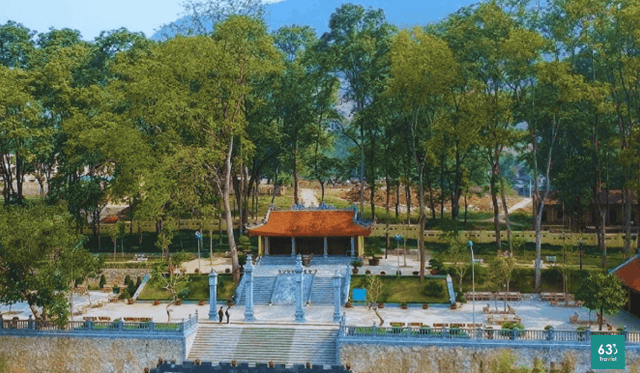
Thuan Chau Flagpole Historical Site - Where Uncle Ho Visited the Northwest.
In the intimate atmosphere of the great family of ethnic groups, President Ho Chi Minh spoke and interacted with everyone. Representatives of the Party and Government honored the achievements of the Thai - Meo Autonomous Region, awarding the First-Class Labor Order to the military, people, government, and party of this region for their contributions to the resistance against the French and their efforts in building peace. The Thuan Chau Flagpole, commemorating this significant historical event, was recognized as a National Historical Site on April 20, 1995.
Son La Provincial Museum
When you step into Son La Province, the Son La Museum is definitely an unmissable destination. It's not just a regular tourist spot but also a shining historical site, located within the complex of the Son La Museum and Prison.
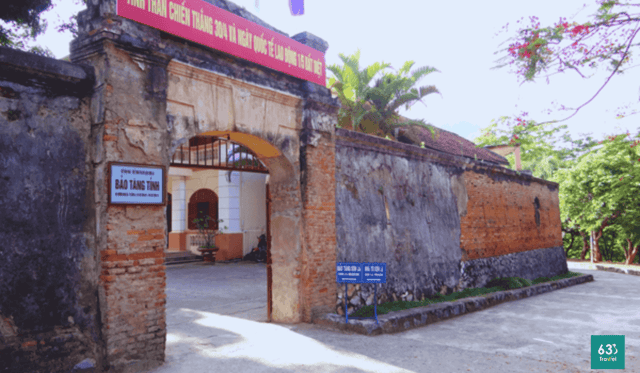
Son La Museum - A Repository of Proud Historical Evidence.
The Son La Museum not only displays ancient artifacts from prehistoric and protohistoric times but also preserves and deeply reflects the distinctive cultural traits of the 12 ethnic groups living in Son La. You can admire thousands of unique artifacts, from everyday tools to traditional costumes, from paintings to sculptures.
Notably, the museum also boasts an impressive collection of ancient Thai and Dao script books, with nearly 1,000 volumes across various genres such as epics, long poems, and folk poetry. This offers a wonderful opportunity to explore the rich culture and history of this region.
Que Lam Ngu Che Stele
When you set foot in Son La province, you cannot miss a deeply significant historical and cultural site: theQue Lam Ngu Che Stele. This site preserves the handwriting of a great figure – King Le Thai Tong. During his campaign to conquer the Northwest region, when he stopped at La Cave, also known as Tham Ke, the king was captivated by the serene beauty of the landscape. It was then that he composed the poem "Que Lam Ngu Che," a literary work shining on the vertical rock face of the cave entrance.
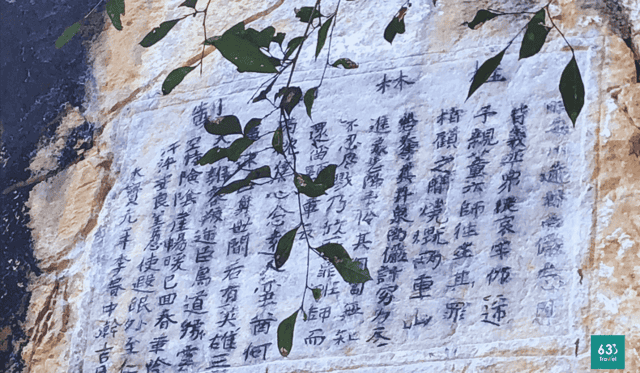
Que Lam Ngu Che Stele Historical Site – The Handwriting of King Le Thai Tong.
This is not only a historical secret but also an attractive tourist spot as you explore this land. The "Que Lam Ngu Che" stele is an inseparable part of Son La's unique historical and cultural narrative, waiting to be discovered and experienced.
Ban Heo Banyan Tree
In the historical footsteps of Son La province,the ancient banyan tree in Ban Heo villagehas become a symbol affirming a strong revolutionary spirit. Through countless upheavals, from difficult days, this site has witnessed the strong unity of the Party Committee, authorities, and people of Ban Heo. Concurrently, the descendants of Ms. Ca Thi Khien – who once served as a liaison for revolutionary cadres at Son La Prison – continue to preserve and develop the spirit of their homeland.
Located in Group 2, To Hieu Ward, Son La City, the Ban Heo banyan tree became a secret link between Son La Prison and external revolutionary forces. Here, Ms. Ca Thi Khien diligently helped and protected the liaison point, contributing to the success of the struggle for national independence. Today, this ancient banyan tree is not only a historical site but also a destination for visitors exploring the Son La Museum and Prison.
Son La Prison Historical Site
Nestled along the historical currents of Son La province,Son La Prisonis an unmissable destination for history enthusiasts. It once held 14 groups of political prisoners, totaling over 1,000 inmates. Despite extremely harsh physical conditions, this very place nurtured many exemplary soldiers who contributed to the success of the August 1945 General Uprising.
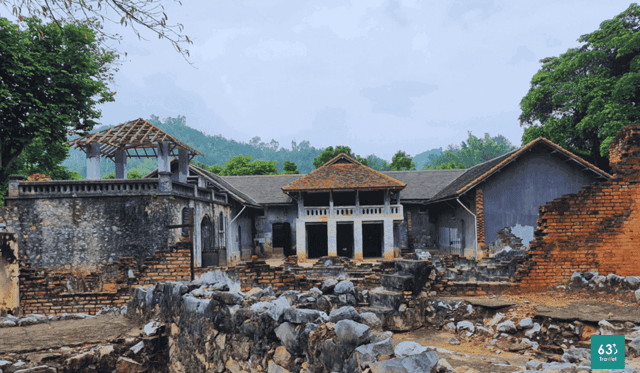
Son La Prison - A "Red Address" for Educating Revolutionary Traditions.
Son La Prison stands as living proof of the brutality of the French colonial regime against the Vietnamese people. Built in 1908, the prison witnessed thousands of Vietnamese citizens imprisoned and tortured. With its harsh regime and torture methods, it became an earthly hell. However, unexpectedly, resilient soldiers transformed this prison into a training ground, fostering indomitable fighting spirits.
Today, Son La Prison has become a destination to better understand the tragic past of the Vietnamese nation and to forever remember the indomitable will of those who sacrificed for freedom and independence. It is an important physical testament, demonstrating the patriotism and resilient spirit of the Vietnamese people, attracting numerous domestic and international visitors for tours, study, and research.
Above are the16+ historical sites in Son Lathat you can visit and explore. Save this list for your exciting experiential trip to Son La. Don't forget to follow63 Stravelfor the latest updates on Vietnam travel!
Son La 11904 view
Update day : 28/05/2024


Monuments close by
See all
Son La Prison Relics
Son La Prison was built by the French colonialists in 1908, next to Nam La stream on top of Khau Ca hill, now in To Hieu ward, Son La city, Son La province. This place held 1,007 communist prisoners, was a revolutionary school, and where the "red seeds" of the Vietnamese revolution were nurtured. Son La Prison was built by the French colonialists in 1908 with an initial area of 500 m2, mainly to imprison common criminals. In 1930, as the Vietnamese revolution's struggle for national independence increased, the French colonialists expanded Son La Prison by 1,500 m2 and began to detain political prisoners. In 1940, the French colonialists built a prison camp with an area of 170 square meters with the intention of holding female prisoners, but this plot was not carried out. Thus, through 3 times of construction and expansion, Son La Prison has a total area of 2,170 m2. In particular, during the process of expanding the prison, the French colonialists also built a series of underground cells 3 meters deep underground, hidden by the kitchen area above. The underground cell system includes 5 individual cells and 2 collective cells, including 1 dark cell. Son La Prison is solidly built, with walls made of stone and brick, and a roof of corrugated iron. The beds for prisoners are built of stone, have a cement surface, and have a leg shackle system along the length of the floor on the outside. With such a design, the Laotian winds of the Northwest region with blazing heat in the summer and cold frosts in the winter have caused diseases to arise and spread quickly. Son La prison is likened to "an open coffin, just waiting for the prisoner to die and bury him". From 1930 to 1945, the French colonialists exiled to Son La Prison 14 groups of political prisoners with a total of 1,013 prisoners, including many comrades who were members of the Central Committee, Party Committee, City Party Committee and many others. core Party officials. Faced with the crimes of the enemy, more than ever, the spirit of the communists shone and lit the fire of revolutionary struggle throughout the Northwest mountains and forests, greatly contributing to the success of the General War. August Uprising in 1945. This place has become a great revolutionary school, training and fostering for the Party and the Vietnamese revolution outstanding and typical Communist soldiers such as: To Hieu, Le Duan, Truong Chinh, Nguyen Luong Bang, Van Tien Dung, Le Duc Tho, Nguyen Van Tran, Le Thanh Nghi, Tran Quoc Hoang and other faithful comrades. With peace restored, Son La Provincial Museum has renovated and embellished the Prison relic three times in 1980, 1994, 2009 - 2010. Son La Prison historical relic also has 2 points: Ban Heo banyan tree, the contact point between Son La Prison Cell and the Party Central Committee and Son La Prison Martyrs Cemetery (Guava Root Cemetery) is The resting place of more than 60 heroes and martyrs who sacrificed their lives at Son La Prison. The historical site of Son La Prison has become a red address in the work of educating revolutionary traditions for generations of ethnic groups in Son La and the people of the whole country. Son La Prison was ranked national in 1962 and a special national historical site on December 31, 2014. Son La Prison Relics has become a school, a center of revolutionary traditional education for generations of Vietnamese people, especially the younger generation. Source: Son La Province Electronic Information Portal
Son La
8625 view
Rating : Special national monument

Thuan Chau Flag Tower historical site
Thuan Chau Flag Tower historical site is located in Pan village, Chieng Ly commune, Thuan Chau district. This place marks a historic event on May 7, 1959, when President Ho Chi Minh together with the Party and Government leadership visited the Northwest. During the resistance war against the French and after peace was restored in the North, despite being busy with thousands of national affairs, Uncle Ho, the beloved Father of the nation, always cared about the people of the Northwest ethnic groups. Responding to Uncle Ho's trust, the people of the Northwest ethnic groups were courageous in fighting, enthusiastically emulating productive labor and wished to welcome Uncle Ho to visit and report to him on his achievements. On May 7, 1959, the wishes of the people of the Northwest peoples came true. The square of the capital of the Thai autonomous region, Meo, was resplendent with flags, flowers, banners and slogans and more than 10,000 people representing 430,000 people from the Northwest ethnic groups happily welcomed Uncle Ho leading the Party and Government delegation. cover the visit. With an extremely simple, intimate and close gesture, Uncle Ho recognized and praised the sacrifices and enormous contributions of the people of the Northwest ethnic groups in the resistance war against the French colonialists and in restoring the economy. economy after the war. On behalf of the Government, he presented the people of the Northwest ethnic groups with the first-class Labor Medal. He advised: We must enthusiastically compete for economic and social development, strengthen economic sectors, apply science and technology to production, develop education and healthcare networks, and strengthen national security. room. More than 40 years have passed, and his advice has been persistently strived to be implemented by the Party Committee, government and people of Son La ethnic groups, and has been making great changes in the Western region of the country. big. Today, the Thuan Chau flag tower historical relic is located right on the campus of Thuan Chau district stadium. Source: Son La province electronic information portal
Son La
8499 view
Rating : National monument
NAKED VERSION TREE
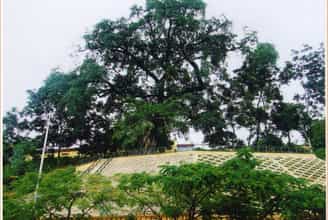
In the early twentieth century, the French colonialists established their governing apparatus in the Northwest region. They built Son La Prison to imprison, exile, and destroy the will to fight of revolutionary soldiers and patriotic Vietnamese people. In December 1939, political prisoners at the prison held a secret meeting and decided to establish a provisional cell. The cell chose the Heo banyan tree as a secret contact point with the revolutionary base outside the prison and with the Party Central Committee. In 1942 - 1943, the revolutionary situation in the country and the world was very volatile, the Party Central Committee directed the Yen Bai and Phu Tho base areas to establish a contact line with the Son La prison cell. Every day, political prisoners in Son La Prison had to go to the banyan tree area to get firewood, so the prisoners set up a secret mailbox to contact and assess the enemy situation, in order to organize an escape. According to the planned plan, in January 1943, Comrades at the Central Agency arranged to meet with comrades in Son La Prison Party Cell at Ban Heo banyan tree. Agree on the prison escape plan. With the careful preparation of prisoners from inside the prison to comrades and soldiers outside the prison, on August 3, 1943, the Cell successfully organized an escape for elite prisoners. returned to the Party Central Committee to continue revolutionary activities. Thus, during the period of struggle against the invading French colonialists, along with other communication locations, the Heo banyan tree was the place where the secret mailbox was located, and the meeting and communication place between communist soldiers of the Communist Party of Vietnam. The prison cell and the Central leadership - have really played an important role, contributing to creating a solid information network, covering the enemy's dense spy network, serving development. of the revolution and contributed greatly to the victory of the movement to gain power in Son La in particular and the country in general. The Heo banyan tree is now a revolutionary historical relic in the special national relic complex of Son La Prison, managed by the Provincial Museum. Every year, the monument welcomes hundreds of thousands of visitors to visit, learn and research. Even though it has gone through many ups and downs of history, the banyan tree is still there as a testament to a historical period of revolution in the twentieth century. Source: Son La Provincial Museum
Son La
8471 view
Rating : National monument

The Guilin Stele dominates
Que Lam Ngu Che stele historical relic belongs to group 3, Chieng Le ward, Son La city. This place demonstrates the historical period of the talented and great strategist Le Thai Tong and his soldiers conquering rebels in the western border region of the country, keeping peace for the country. The relic was ranked at the National level by the Ministry of Culture and Information on February 5, 1994. King Le Thai Tong, whose name is Nguyen Long, is the second son of King Le Thai To (Le Loi) and Queen Mother Pham Thi Ngoc Tran, a native of Quan Lai, Loi Duong district (now Tho Xuan - Thanh Hoa). ). Since ascending the throne, King Le Thai Tong has paid great attention to the Northwest region, the land of the country. To consolidate and ensure national unity, like King Le Thai To and other kings, during the 9 years of reigning the country, King Le Thai Tong twice commanded soldiers to go to the Northwest to suppress traitors. inverse. In March of the year Canh Than (1440), the king for the first time personally and with his soldiers went to the Western town to fight a rebel army named Thuong Nghiem in Chau Muong Muoi (now Thuan Chau district, Son La province). Wherever the king went, he was supported by the people, so the royal army quickly crushed the rebels. On the way back, the king and his soldiers stopped at Dong La (Tham Bao Ke), a natural rock cave in Muong La province. The king saw that this place had beautiful scenery, favorable geography, profound meaning and a peaceful soul. The king had his soldiers carve a poem and preface on the cliff at the entrance of Dong La. The poem, Guilin Ngu Che, has the following meaning: "The chief of Thuan Chau, Thuong Nghiem, rebelled, was ungrateful, and led his troops to follow the Ai Lao people to rebel. Personally commanded six armies to conquer it. Thuong Nghiem used all his strength and offered an elephant to surrender. I felt sorry for him for kneeling and crawling without a weapon, not having the heart to cut him, so I forgave him, then brought the army back and left a poem. Exactly one year later, in March 1441, the king again sent troops to suppress the Nghiem Nghiem rebellion in Chau Muong Muoi. Everywhere he went, the people responded and helped him, so the royal army quickly captured General Ai Lao. Dao Mong, at the same time captured Thuong Nghiem's children Sinh Tuong and Dong Dong. The traitor Thuong Nghiem surrendered and accepted the crime, from now on the western border of the Fatherland has been at peace. To pay tribute to the merits of King Le Thai Tong and to make the Que Lam Ngu Che stele monument forever dignified and shine in the hearts of successive generations, meeting the spiritual and healthy religious needs of a large number of people. people, with the consent of the Ministry of Culture and Information, in September 2001 the Provincial Party Committee and People's Committee of Son La started construction of the temple of King Le Thai Tong in Son La town and was inaugurated on September 22. January 2003, named "Guilin Ling Tu". Source: Son La province electronic information portal
Son La
8297 view
Rating : National monument

Ta Vai Bridge
Ta Vai Bridge, located in Ta Vai village, Chieng Hac commune, Yen Chau district, is a famous historical relic of the province. During the resistance war against the French colonialists, the bridge not only had a meaning for people's livelihood but was also a historical relic. Ta Vai village has a bridge with 46 fierce attacks and suffered 1,272 bombs from American aircraft to cut off the main artery of Highway 6. But the bridge still stands, ensuring smooth traffic. In 1965, the American enemy used air force and commandos to frantically sabotage the North in order to prevent the North from providing support to the Southern people. On June 20, 1965, American planes dropped 6 bombs on Khau Day village (Chieng Hac, Yen Chau) and 20 rockets on Ta Vai bridge. . Starting from here, American aircraft continuously bombarded Yen Chau, but due to good preparation of plans to deal with America's destructive war, Yen Chau entered the war without being surprised. At this time, Ta Vai bridge became a place of fierce fighting between us and the enemy. With the determination to ensure smooth traffic flow in all situations, determined to stay at the traffic center of Ta Vai bridge, the militia and self-defense force and armed force units have always stuck to the road and bridge to ensure traffic is clear. Here, from March to December 1966, we arranged the 14th Battalion of anti-aircraft artillery to protect the Ta Vai bridge, in which Company 3, consisting of two 37mm artillery batteries, was positioned in the area of Ban Tat hill. , adjacent to Tai Vai bridge, Company 2, consisting of four 37mm guns, was arranged in a continuous position to the west of Ta Vai bridge. In addition to the two main battlefields with 37 mm cannons, there is also a secondary battlefield consisting of a 12.7 mm company located in lower terrain also near Ta Vai bridge. To arrange such a battlefield, the people of Ta Vai village and the soldiers dug fortifications to build a road around the hillside to pull up artillery. Each 37 mm cannon required 200 people to pull it. To encourage morale and help soldiers fight, the people of Ta Vai village enthusiastically participated in the fighting and produced rice to contribute to the front lines. During those years, the people of Ta Vai, along with other villages in Chieng Hac commune, contributed nearly 9 tons of vegetables, 500kg of poultry, tons of food... In addition, the commune's performance team also went to the battlefield in uniform. army and militia service. Many times having to move the battlefield, the people and the soldiers used forest rope to braid to pull the artillery; used bamboo to make shacks for the soldiers and helped the soldiers dig over 3,000 meters of shelters on the battlefield with the determination to protect the transportation artery for the battlefield. The enemy destroyed bridges and roads, but the spirit of the army and people here was undeterred. Despite the roar of bombs and bullets, they still enthusiastically repaired the roads for vehicles to pass, with the emulation movement "Singing over the sound of bombs" and "Singing over the sound of bombs" and "Singing over the sound of bombs" The enemy broke it, I'll fix it. If the enemy destroys me, let me go." On December 8, 1966, the enemy organized 3 groups of planes to drop bombs on the hill where there was an anti-aircraft artillery battlefield and bombarded the Ta Vai bridge. At this time, 2 bridge spans were hit by bombs and fell into the stream and traffic on Route 6. was cut. Because the bridge was in a dangerous location, the stream was wide, the water was deep, and the enemy fought day and night, so it was very difficult to rebuild the bridge. Faced with that situation, the bridge protection unit decided to build a bypass and underground road to ensure traffic at all costs. The underground tunnel of Ta Vai bridge was built by soldiers and civilians about 1km downstream, but the enemy still discovered it and continued to bombard it. With courageous fighting spirit, the army and militia units have well secured traffic arteries. Promoting the tradition of tenacious fighting and the spirit of solidarity, the people of Ta Vai village with a boiling spirit of hatred for the invaders turned into revolutionary actions in combat and production, making an outstanding contribution to the achievements in defeating the US imperialist plot to expand the war. At the Ta Vai battlefield, the army and people of Yen Chau shot down 2 F105 planes and captured American enemy pilots with rifles, the lifeline of support for the South was always running smoothly, that victory quickly spread throughout the world. place, known throughout the country. Today, the war has receded into the past, the people of Ta Vai work hard in production and continue to contribute human and material resources to their homeland, where the Ta Vai bridge marks the crimes of American imperialism during the war. war of invasion in Vietnam. Talking about Ta Vai bridge is talking about the heroic, resilient fighting spirit and glorious fighting of Yen Chau's army and people. Source: Son La province electronic information portal
Son La
8212 view
Rating : Provincial level relics
Nearby tourist attractions
See all
Dai Yem Waterfall
In addition to the name Dai Yem, this waterfall is also called "Nang waterfall" or "Ban Vat waterfall". The waterfall originates from two streams of Bo Co Lam and Bo Ta Chau, located at the confluence of Vat stream and Bo Sap stream, in Muong Sang commune, Moc Chau district. Legend has it that more than 700 years ago, there was a couple who loved each other dearly. But because of the war, both had to separate. The boy went to war, and the girl went to the waterfall every day to wait for her lover to return. One day, it rained and stormed, the water flooded the entire waterfall. The girl was swept away, leaving only the token of love, an embroidered scarf, scattered near the waterfall. The villagers mourned so they named the waterfall "Dai Yem", which in ancient Thai means "Love Thread". Because of this touching legend, the waterfall has become a place to "prove love" and an ideal destination for many couples. Currently, the waterfall is being preserved and managed by Dai Yem Waterfall Tourist Area. Like a girl in the age of love, Dai Yem waterfall is sometimes gentle and peaceful but also sometimes fierce and passionate. To fully feel the wild beauty mixed with a bit of dreaminess of the waterfall, you should come here during the pouring water season. The period from April to September is the best time to see the falls. At this time, the stream flows rapidly, the amount of water pouring in is huge, creating a white, mesmerizing curtain, making viewers overwhelmed and excited. But if you want to see something gentler and quieter, you can also visit the waterfall in the dry season. At that time, the waterfall will become gentle and full of dreams. The sound of the gurgling stream mixed with the chirping of birds from the deep forest, all blend together, creating a poetic scene. But if you want to see something gentler and quieter, you can also visit the waterfall in the dry season. At that time, the waterfall will become gentle and full of dreams. The sound of the gurgling stream mixed with the chirping of birds from the deep forest, all blend together, creating a poetic scene. The first experience that any tourist cannot miss is admiring the majestic beauty of Dai Yem waterfall. The waterfall is more than 100m high, divided into two distinct branches: the upper waterfall is about 4,000 m2 wide with 9 floors symbolizing 9 levels of love, while the lower waterfall is smaller (area of about 300 m2) and has 3 floors. The two clusters of waterfalls are about 200m apart, flowing day and night. From a distance, they look like a soft peach band winding around the cliff. With its poetic and magical beauty, this waterfall has become a place to visit, picnic, check in and take photos for many tourists, especially young people.
Son La
7314 view
From January to December

Tien Phong Lake
Tien Phong Lake in Son La is a typical place of wild and majestic beauty, but extremely romantic in the Northwest mountains and forests. Visiting this land, visitors will admire the charming feng shui and enjoy the fresh air of nature, and have many interesting experiences when yachting on the lake. Located in the middle of the vast steppe, Tien Phong Lake has thousands of winds and warm sunshine, captivating many tourists. Tien Phong Lake in Son La is located in Muong Bom commune, Mai Son district. The place is located right next to National Highway 6, 23km from Son La town, 7km from Hat Lot town and 2km from Na San airport. This is a prime location surrounded by majestic mountains. It is a place surrounded by beautiful nature - in the middle of the immense steppe. To the East and North are two majestic mountain ranges, one after another. To the East is the Na San plateau full of fruits and thousands of green tea hills. All have created a charming landscape, attractive nature, bringing moments of relaxation and peace, holding the traveler's feet. The scenery of Tien Phong Lake is created from Tien Phong dam made of earth and solidified by solid concrete panels. Tien Phong Dam is 23m high, 120m2 wide and 120m long. Coming here, visitors can witness with their own eyes the beautiful natural scenery with a stretching blue color. The vast lake surface is jade green, in the distance there are deep green tropical forests and deep clouds and sky. Nature guides us, people do not want to leave the majestic landscape of Tien Phong. Cruising is an attractive experience for tourists when visiting Tien Phong Lake in Son La. There's nothing more wonderful than floating on the water and taking in the wonderful view of nature. You can choose to row a manual boat, a pedal boat or a motor boat depending on your preference. Many tourists also choose to fish to preserve the beautiful nature. Just do it the way you like, immerse yourself in nature to feel the slow passage of time, preserving the most wonderful emotions. From a distance, the floating island looks like a turtle's shell floating in the middle of the lake. The landscape here is always green and fresh from the young grass and the wind. The wind brings cool and refreshing steam to the small island. Exploring the floating island, visitors will be immersed in the fresh nature here, enjoying the freshest and most peaceful air of their lives.
Son La
7346 view
From January to December

Pha Luong Mountain
Possessing an impressive height above sea level of 2,000 m, the mountain peak is located in the Vietnam - Laos border area and has received the love of many tourists in recent years. After arriving at the center of Moc Chau district, you need to travel another 40 km to reach the foot of the mountain. In addition to the name Pha Luong peak, visitors can also use the name Bo Lung to talk about this tourist destination. When you come here, you will experience the feeling of conquering the mountain peak with impressive heights. In particular, it is the feeling of seeing the majestic and wild scenery from above that is not available everywhere. For those who love to explore and are passionate about adventure sports, this will be a great destination. You can also enjoy the fresh, cool atmosphere of the Northern highlands and relax after the stress and fatigue of life here. For young people, this is an ideal check-in point and great "cloud hunting" in the early morning. Featuring the climate of the North with four distinctly changing seasons, visitors can reach Pha Luong peak at any time of the year. Because this place at each time will bring its own unique beauty and impression to tourists. However, because the road to the top of the mountain is up to 2000m high and difficult, visitors should choose a travel time from March to April. This is the time with warm sunshine and no rain, convenient for climbing. The mountain is safer as well as helps the sightseeing process. One of the famous check-in points when conquering Pha Luong peak is the uniquely shaped rock outcrop. The breadth of space and scenery, along with the rocky outcrop that juts out, make your photo even more impressive. Visitors do not need to worry because the stones are quite large and thick. Be careful when checking in in the rain because they are easily slippery. In addition to experiencing the scenery and atmosphere at the top of the mountain, visitors also have the opportunity to discover more about the typical Lao market. You can find handicraft products, specialty dishes in Moc Chau, dried meat,... as gifts for relatives or friends after the trip. Although it is an attractive tourist destination and brings wild and impressive beauty to tourists. But Pha Luong peak is quite difficult to conquer, so in addition to experience, you also need to know the following notes: With an altitude of 2000m, when you reach the top of the mountain you will see the temperature drop quickly. Especially, if you come in the winter, the temperature is lower, so you need to bring warm clothes, towels, wool hats, gloves, etc. To avoid sudden changes in temperature that affect your body. During climbing, you should use specialized shoes for climbing. Do not wear flat shoes or sandals because they can cause slipping and danger during movement. Visitors should carefully consider their health and mobility before deciding to climb Mount Pha Luong. People with cardiovascular diseases should not move to the mountains. Before conquering the mountain peak, you should have a light snack and drink water to give yourself more energy. Absolutely do not arbitrarily throw trash indiscriminately while moving or visiting the mountain top. Always bring identification documents to present for check-in procedures at the border station.
Son La
7677 view
From March to April

Son La Prison and Son La Museum
In the heart of the city, there is a hill named Khau Ca lying beside the Nam La stream. This place also preserves historical evidence of Son La Prison - evidence of a historical period of revolutionary struggle and the spirit of injustice. The remains of resilient communists who were imprisoned by the French colonialists, and the Son La museum, which displays many precious artifacts, introducing the historical and cultural traditions of a community of 12 ethnic groups united together. together to build Son La into a rich province of Vietnam. Son La Prison was built by the French colonialists in 1908 with an initial area of 500 m2. The prison is built quite solidly: the walls are built of stone and brick, the roof is covered with corrugated iron, there is no ceiling, the beds for prisoners are also built of stone, the surface is cemented, the outside edge is attached with a system of vertical leg shackles. along the length of the floor. In each cell there is a floating toilet built higher than the floor, without a lid, without flushing water, and not cleaned regularly. With such a design, in the summer, the Lao wind of the Northwest region causes scorching heat, the frost creates cold, bone-chilling cold in the winter, combined with the polluted environment in the area. Each cell has caused diseases to arise and spread very quickly among prisoners. In 1930, the Communist Party of Vietnam was born and led the people to fight against the brutal regime of feudal colonialism. The struggle movement surprised the enemy, who frantically sought every way to suppress and arrest patriotic Vietnamese people in an attempt to quell the revolutionary movement. On the other hand, strengthen the construction and expansion of the prison system throughout the country, paying special attention to Son La prison. In 1940, Son La Prison was expanded to add a large prison to hold more prisoners and send a number of female prisoners to Son La, but that plot failed to materialize. Thus, through 3 times of construction and expansion, Son La prison has a total area of: 2,170m2. The French colonialists turned this place into a living hell to imprison, deport and destroy the will of the Communists to fight. With an extremely harsh prison regime and extremely cruel torture methods, the enemy thought they could destroy the spirit and body of the revolutionary soldiers, but this place became a revolutionary school. network, train the will and supplement the Party and the revolution with loyal communist soldiers and party members, most notably the role of comrade To Hieu and many other loyal comrades. After being devastated twice by the enemy's bombs, the old relics are now dilapidated, remaining almost nothing more than a pile of destroyed bricks, and the ruined prison walls are a testament to the brutal crimes of the enemy. What remains intact is the To Hieu peach tree, a symbol associated with the name of the steadfast Party Secretary of the prison, which still blooms brilliantly when spring comes... In 1952, when the French colonialists withdrew from Son La, they bombed to erase traces of their crimes. The second time in 1965, the American imperialists raided Son La Town and destroyed part of the prison. In 1980, Son La Museum carried out the first restoration: Leveling bomb craters, rebuilding some surrounding fence sections; The second time, in 1994, restored the two watchtowers, the kitchen, the large prison, reinforced the underground bunker, and built the walls of the cells according to the traces of the old foundations. In 1994, Son La Museum intended to restore the entire relic site to its original form, but could not find complete records, so there was not enough scientific basis to restore the entire site. Just build the walls a little higher so visitors can visualize the structure of the Son La prison complex. Every year, the historical site of Son La prison welcomes hundreds of thousands of tourists to visit, research, study... Surely, at some point, tourists come to Son La, return to the mountains and forests. Northwest to experience and reminisce about the war that took place more than a century ago; With the skillful leadership of the party, the passionate patriotic spirit willing to sacrifice for national independence, the strong solidarity between peoples... We have left behind a peaceful country for today's posterity.
Son La
7585 view
From January to December

Son Moc Huong Cave
With an area of 6,915 square meters, Bat Cave contains an underground water source that never dries up. The name Bat Cave originates from the fact that in the past, there were large colonies of bats living and nesting here, but now they have left elsewhere. However, the name Bat Cave is still called by people here to this day as a familiar name from a long time ago. Above the ceiling of the cave are high stone arches hanging down to form magical shimmering stalactites. These stalactites form many interesting shapes such as fairies, fairies, animals... All create a scene that is both sparkling and majestic. This is a place that when traveling to Moc Chau you should not miss! Legend has it that once upon a time, there was a sacred dragon who, when flying over this land, saw the majestic mountains and cool climate, so he humbled himself and hid in Bat Cave and resided here. That's why this mountain range has many mysterious colors such as: white in the morning, blue at noon, then pink in the afternoon, and finally purple at sunset. People here often tell each other that it is because the dragon's body is surrounding the mountain. Later, when the dragon died, it released 7 pearls to repay the favor. The 7 pearls are the 7 mountains that later created Bat Cave. Thanks to the legendary stories that have been passed down from generation to generation, this place becomes even more attractive and makes many curious tourists want to come here to verify. From the moment you enter from the cave entrance, the light shining into the cave will make you feel like you are lost in a fairyland with different dark and light shades. Visitors will admire the beauty of the limestone stalactites hanging down, creating an amazing natural picture. Furthermore, these rocks also have many different shapes, making them interesting for visitors. The most special is the stone block shaped like a man and woman in love in the shallow lake in the middle of the cave, a highlight that makes everyone admire. In the cave, in addition to the shapes created from limestone blocks, there are also many banyan trees whose roots form shapes on the ground such as elephants, tigers... Another special thing about Son Moc Huong Cave is that the middle of the cave is arched higher than other places in the cave, with a stone curtain at the entrance. This is called the "princess" chamber, which is also an attraction in this place. This. Bat Cave is both a place to visit and a place to explore with forests and trees growing around, so visitors need to pay attention to the following things: Because the cave is located in a dense forest, visitors should wear comfortable and covered clothes to both climb the mountain and avoid being bitten by insects or mosquitoes. You should also bring mosquito spray to ensure safety. , especially with children. When visiting Son Moc Huong Cave, parents need to pay attention to their children's health when climbing the mountain and visiting the cave, then provide timely solutions if the child is too tired or too hyperactive to run around. toss.
Son La
8546 view
From January to December
 AI Travelviet